Choosing the right patient transfer device for bed can make daily care safer, smoother, and less stressful for both caregivers and patients.
From slide sheets and positioning pads to transfer belts and lift aids, the best option depends on mobility level, transfer type, and how much assistance is needed.
Best 10 Patient Transfer Device for Bed Picks for 2026
Repositioning Aid
Multipurpose 48" x 40" Positioning Bed Pad
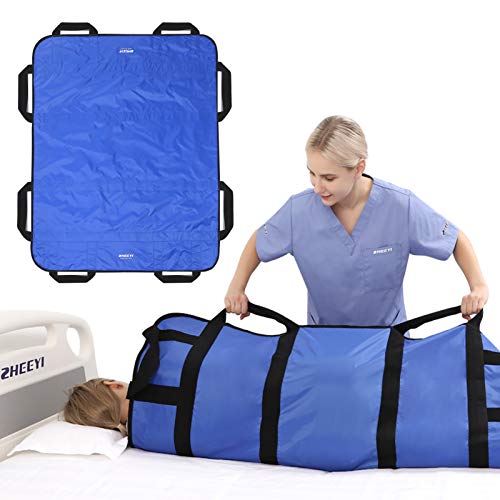
- 8 reinforced handles for turning and lifting
- Waterproof nylon helps protect bedding
- Machine-washable and reusable
Best For: Caregivers needing a washable bed pad for repositioning and light transfers
Stand Assist Lift
Vive Mobility Sit to Stand Patient Lift

- Helps with bed-to-chair and toilet transfers
- Supports users who can bear 60-70% of weight
- Steel frame rated up to 400 lbs
Best For: People who can stand with help and need a sit-to-stand transfer aid
Washable Transfer Pad

- 8 handles for lifting and repositioning
- Quick-dry, waterproof, and absorbent design
- Reusable and machine washable
Best For: Caregivers needing a reusable bed pad for transfers and moisture control
Slide Transfer Kit
Transfer Board and Slide Sheet Set

- Includes transfer board plus slide sheet
- Anti-slip backing and curved edges
- Three handles for grasping during transfers
Best For: Sliding transfers between beds, chairs, cars, toilets, and tubs
Premium Washable Positioning Pad
Teal Elite Bed Pad with 8 Handles

- 8 reinforced handles for turning and lifting
- Waterproof, quick-dry, absorbent underpad
- Reusable for 500+ washes; supports up to 400 lbs
Best For: Caregivers wanting a reusable bed pad that also helps with assisted transfers
Flexible Lift Assist Belt
Transfer Sling for Bed Positioning

- Assists turning, lifting, and posture changes
- 6 handles plus quick-release side-lying support
- Washable nylon/mesh build; 260 lb capacity
Best For: Single-caregiver repositioning and bedside transfer help
3-Layer Transfer Pad
Waterproof Slide Sheet with Handles

- 3-layer build for comfort and durability
- 8 reinforced handles for turning and lifting
- Machine washable and reusable waterproof design
Best For: Caregivers who want a reusable slide sheet for routine bed repositioning
Padded Sling Transfer Aid
Padded Transfer Sling for Beds and Wheelchairs

- Padded Oxford cloth build for comfort
- Double handles help secure assisted transfers
- Supports up to 300 lbs and folds for storage
Best For: Caregivers needing a padded sling for bed, wheelchair, and car-seat transfers
Bed Turning and Positioning Belt
Turning Belt for Bedridden Care

- Wide 17.8-inch back strap for support
- Hooks to bed rail for more stable positioning
- Helps with turning, lifting legs, and cleaning care
Best For: Bedridden patients who need turning, repositioning, and daily bedside care
Low-Friction Slide Sheet
Portable Patient Transfer Slide Sheet

- Coated nylon surface lowers transfer friction
- Tubular design is ready to use without folding
- Lightweight and foldable for easy storage
Best For: Sliding and repositioning patients between beds, wheelchairs, and vehicles
Repositioning Aid – Multipurpose 48" x 40" Positioning Bed Pad
If you need a patient transfer device for bed that helps with turning, lifting, and repositioning, this reusable positioning pad offers a straightforward option. Its 48″ x 40″ size, double-sided nylon fabric, and reinforced handles are designed to make caregiver-assisted movement easier while also helping protect bedding from accidents.
Best For: Caregivers helping adults with limited mobility who need a washable bed pad for turning and repositioning.
Pros:
- 8 heavy-duty reinforced handles for easier turning, lifting, and repositioning
- Waterproof nylon fabric helps protect sheets in case of accidents
- Machine-washable and reusable for regular caregiving use
- Lightweight design with a 48″ x 40″ surface
Cons:
- Designed for assisted movement rather than independent transfers
- One-piece pad may be less specialized than a transfer board or stand-assist device
This is a practical choice when the priority is easier repositioning in bed and simple cleanup after incontinence or spills. The handle layout and washable construction make it a solid everyday caregiver tool.
Stand Assist Lift – Vive Mobility Sit to Stand Patient Lift
For a patient transfer device for bed that supports sit-to-stand movement, this lift is built for people who can bear 60-70% of their body weight. It is intended to help move someone from a bed to a wheelchair, toilet, or sofa while reducing fall risk and strain on caregivers.
Best For: Adults and seniors who can stand with assistance and need help with sit-to-stand transfers.
Pros:
- Supports transfers for users who can bear 60-70% of body weight
- Steel frame supports up to 400 lbs
- Foam-covered handrails, cushioned shin rests, and split seat pads
- Dual locking brakes and swivel casters for controlled movement
Cons:
- Widest base is 26 inches, so doorway fit should be checked first
- Not suited for users who cannot participate in standing transfers
This model fits situations where the user can assist with standing and needs a more structured transfer aid. The safety features and weight capacity make it a strong home-care or facility option, as long as the doorway width works for your space.
Washable Transfer Pad – Improvia Positioning Bed Pad
This patient transfer device for bed combines a positioning pad and underpad in one reusable design. With 8 reinforced handles, a quick-drying surface, and waterproof construction, it is meant to make lifting, turning, and transferring easier while helping manage moisture.
Best For: Caregivers looking for a reusable, quick-drying bed pad for handling transfers and incontinence support.
Pros:
- 8 reinforced handles help reduce strain during lifting and repositioning
- Quick-dry layer is designed to dry in 10 minutes
- Waterproof, absorbent, and reusable up to 500 times
- Holds up to 12 oz. of fluid and is machine washable
Cons:
- Best suited for assisted transfers rather than standalone mobility
- Size is smaller than some larger positioning pads
Overall, this is a practical caregiver-focused option when you want one pad to help with transfers and moisture management. The reusable build and quick-drying center add convenience for frequent daily use.
Slide Transfer Kit – Transfer Board and Slide Sheet Set
If you want a patient transfer device for bed that focuses on sliding rather than lifting, this board-and-sheet kit is built for straightforward position changes. The transfer board, anti-slip backing, and included slide sheet are designed to help move a patient more securely between surfaces like a wheelchair, car, toilet, or tub.
Best For: Transfers that rely on sliding support between beds, wheelchairs, cars, toilets, and tubs.
Pros:
- Includes both a transfer board and a slide sheet
- Anti-slip backing helps keep the board more secure
- Three-handle design gives users a place to grasp
- Curved edges are made to avoid scratching the user
Cons:
- More specialized for slide transfers than for lifting or turning in bed
- Requires proper caregiver technique for safe use
This set makes sense when you need a simple, portable transfer solution with a smoother sliding motion. Its compact size and included sheet add flexibility for common daily transfers.
Premium Washable Positioning Pad – Teal Elite Bed Pad with 8 Handles
If you need a patient transfer device for bed that can also protect linens, this washable positioning pad is built for practical daily care. It combines an absorbent underpad with reinforced handles, so caregivers can turn, lift, or reposition a person while keeping moisture contained.
Best For: Home caregivers, senior care, post-surgery recovery, and incontinence protection where a reusable lift pad is preferred.
Pros:
- Eight reinforced handles support safer turning, lifting, and repositioning.
- Waterproof, quick-dry construction helps protect bedding and reduce leaks.
- Reusable design is rated for 500+ washes, making it more economical than disposables.
- Supports up to 400 lbs and includes a non-slip backing for added stability.
Cons:
- Best suited for assisted transfers rather than a full mechanical lift.
- Its XL size may be more than some users need for light-duty use.
This is a strong all-around option if you want one product that handles both absorbency and caregiver-assisted transfers. The balance of comfort, durability, and handle placement makes it especially useful for routine bed care.
Flexible Lift Assist Belt – Transfer Sling for Bed Positioning
This patient transfer device for bed is designed for repositioning, turning, and helping with bed-to-chair movement when one caregiver needs extra control. The sling-style belt offers multiple handles and a locking option for side-lying support, making it useful for routine positioning tasks.
Best For: Elderly or disabled patients who need assisted turning, posture changes, or safer repositioning with a caregiver.
Pros:
- Can help turn, lift, bend knees, and assist with posture changes.
- Quick-release design can lock a patient in a fixed side-lying position.
- Six total handles provide multiple grip points for better control.
- Soft nylon and mesh construction is meant to be comfortable and washable.
Cons:
- 260 lb weight limit may exclude some users.
- Not intended to assist patients with walking.
For focused repositioning support, this belt is practical and straightforward. It is most appealing when the goal is safer turning and bed care rather than broader mobility assistance.
3-Layer Transfer Pad – Waterproof Slide Sheet with Handles
If you want a patient transfer device for bed that doubles as a positioning pad, this three-layer design is aimed at turning, lifting, and sliding support. The waterproof yet breathable build and reinforced handles make it a practical pick for everyday caregiving tasks.
Best For: Bedridden patients, caregivers, and home care setups that need a reusable transfer sheet with handle support.
Pros:
- Three-layer construction adds comfort, durability, and waterproof protection.
- Eight reinforced handles help with turning, repositioning, and lifting.
- Reusable and machine washable for easier cleaning and maintenance.
- Can be used as a glide sheet, transport pad, or bed transfer assist.
Cons:
- It is still a manual assist product, not a powered patient lifter.
- The 48″ x 40″ size may not suit every bed setup.
This is a versatile option if you want one bed pad that can support several caregiving tasks. Its combination of handle count, waterproofing, and reusable design makes it a strong everyday utility choice.
Padded Sling Transfer Aid – Padded Transfer Sling for Beds and Wheelchairs
If you need a patient transfer device for bed that helps with sitting up, repositioning, or moving between surfaces, this transfer sling is built for practical everyday use. Its padded design, sturdy handles, and non-slip construction are aimed at making assisted transfers more stable and less stressful for both caregiver and patient.
Best For: Home caregivers and healthcare users who need a padded transfer sling for bed, wheelchair, or car seat assistance.
Pros:
- Double-grip handles and reinforced stitching help provide a secure hold during transfers.
- Soft padding with Oxford cloth, neoprene, and pearl cotton adds comfort for routine use.
- Non-slip design supports more stable transfers and helps reduce slipping.
- Supports up to 300 lbs and can be folded or rolled for storage.
Cons:
- It is a sling-style aid, so it may not suit users who need a full-body lift system.
- Care instructions call for gentle hand washing or wiping, which may take more effort than machine-washable gear.
Overall, this is a versatile option if you want a compact patient transfer device for bed that can also help with wheelchairs and car seats. The focus here is on comfort, grip, and stable handling rather than heavy mechanical lifting.
Bed Turning and Positioning Belt – Turning Belt for Bedridden Care
This patient transfer device for bed is designed for turning, repositioning, and lifting support when caring for someone who is bedridden or recovering after surgery. The wide back strap and fixed-bed attachment are meant to help reduce caregiver effort while making side-rolling and cleaning tasks more manageable.
Best For: Bedridden care, diaper changes, repositioning, and turning support in home or nursing settings.
Pros:
- 17.8-inch wide strap supports the back and helps avoid pressure on the waist.
- Lengthened fixed belt can be secured to the bed railing with hook and loop.
- Helps with rolling, repositioning, lifting legs, and daily care tasks.
- Breathable and foldable for use in bed, wheelchair, or car chair settings.
Cons:
- Designed mainly for positioning and turning, not for full lifting transfers.
- Wipe-clean polyester construction may not feel as cushioned as padded alternatives.
For caregivers looking for a straightforward patient transfer device for bed positioning, this belt focuses on support, stability, and easier body turning. It is especially useful when the main need is reducing strain during routine bedside care.
Low-Friction Slide Sheet – Portable Patient Transfer Slide Sheet
If you want a patient transfer device for bed that reduces friction during moving and repositioning, this slide sheet is a simple, lightweight option. Its tubular design and coated nylon surface are intended to make transfers into or out of a bed, wheelchair, stretcher, or vehicle easier for caregivers.
Best For: Sliding and repositioning elderly, disabled, or obese patients between beds, wheelchairs, and vehicles.
Pros:
- Low-friction coated surface helps reduce caregiver effort during transfers.
- Tubular design can be used without folding for quicker setup.
- Lightweight, foldable, and easy to stow after use.
- Waterproof, breathable nylon is described as durable and easy to wash and dry.
Cons:
- It is a slide sheet, so it is not a lift-assist sling.
- At 26 x 18 inches, sizing may be more limited than larger transfer aids for some users.
This is a practical pick if your main concern is smoother sliding rather than lifting support. As a patient transfer device for bed, it is geared toward reducing strain during repositioning and helping protect the user’s skin from unnecessary drag.
How We Picked the Best Patient Transfer Device for Bed
We focused on practical features that matter in real caregiving: ease of use, support level, material quality, handle design, washability, and whether the aid is better suited for turning, lifting, sliding, or sit-to-stand transfers. We also looked for products that can help reduce strain during routine care.
Quick Comparison
Not every Patient Transfer Device for Bed serves the same purpose. Positioning pads and slide sheets are usually best for turning and repositioning in bed. Transfer boards work well for short seated moves, such as bed-to-wheelchair transfers. Gait belts and sling-style aids are more appropriate when a caregiver needs added control during assisted standing or walking. Car transfer aids can be useful when transfers extend beyond the bedroom.
Key Buying Factors for a Patient Transfer Device for Bed
Transfer Type
Start with the movement you need most often. If the main task is rolling, turning, or moving a person higher in bed, a reinforced pad or slide sheet is usually the best fit. For seated transfers, choose a board. For standing support, consider a transfer belt or sit-to-stand device.
Support and Safety
Check weight capacity, handle placement, and whether the design allows caregivers to keep better posture. Multiple reinforced handles can improve grip and control, while wider surfaces may help distribute pressure more evenly.
Comfort and Materials
Look for smooth, low-friction fabrics for sliding tasks and soft, breathable materials for prolonged contact. Waterproof or quick-drying construction can be especially helpful in bedside care, incontinence management, and frequent washing.
Cleaning and Durability
Reusable and washable products are often the most practical choice for daily use. Reinforced stitching, strong seams, and easy-care fabrics can extend service life and reduce replacement costs.
Who Should Buy Which Patient Transfer Device for Bed?
If the person being cared for spends most of the day in bed, a positioning pad or transfer sheet is usually the most versatile choice. If transfers involve a wheelchair, bed, or chair at close range, a slide board may be more useful. For seniors who can bear some weight but still need help standing, a sit-to-stand lift or transfer belt can provide the right balance of support and independence. Caregivers handling frequent repositioning should prioritize comfort, grip, and washability first.
In short, the best Patient Transfer Device for Bed is the one that matches mobility, reduces caregiver strain, and fits the routine care tasks you perform most often.