Compression boots can help reduce post-workout soreness, support circulation, and make recovery feel more efficient after long training sessions or demanding days on your feet.
Below, we break down the best compression boots of 2026 so you can compare wireless convenience, pressure control, coverage, and comfort before you buy.
Best 10 Compression Boots Picks for 2026
Wireless Elite Recovery

- Fully wireless, hose-free design
- 7 levels with up to 4 hours battery life
- Bluetooth app control and HyperSync
Best For: Athletes and travelers wanting premium cordless recovery
Fast Full-Leg Recovery

- 4 chambers cover feet to thighs
- 3 modes and 8 pressure intensities
- Sensor control adjusts fit and pressure
Best For: Home users and athletes who want full-leg corded recovery
Portable Wireless Performance

- Foldable design fits in a backpack
- Wireless with built-in control panel
- 4 pressure levels and 3-hour battery
Best For: Runners and travelers wanting compact wireless recovery
Professional Sequential Recovery
QUINEAR Leg Recovery Compression System

- 4-chamber sequential compression from foot to thigh
- 8 intensities, 3 modes, and 3 timer settings
- Built-in pressure sensor helps fit different leg sizes
Best For: Athletes who want adjustable, no-heat recovery boots
Large Sequential Recovery
QUINEAR Air Compression Recovery System, Large Fit
- 4 air chambers deliver gradient leg compression
- 8 intensities, 3 modes, and 3 timer options
- Pressure sensor adapts to different leg sizes
Best For: Athletes wanting a large no-heat recovery system
Full-Leg Recovery Pick
Air Compression Boots for Circulation
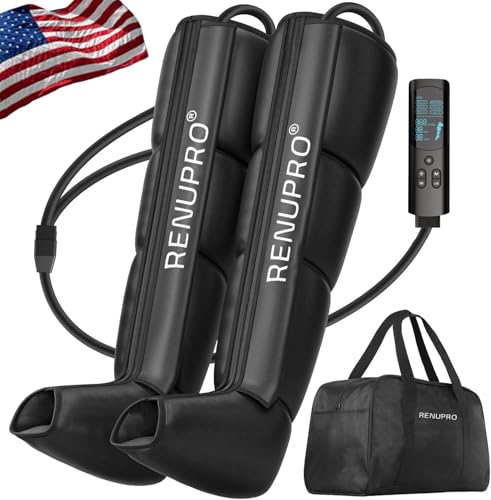
- Covers feet, calves, knees, and thighs
- Smart sensor with overlapping air chambers
- 6 modes, 9 levels, 3 timer options
Best For: Athletes and active users needing full-leg recovery support
Portable Cordless Option
Foot and Calf Compression Boots

- Cordless with rechargeable battery
- 360° squeeze across foot and calf
- Four straps for flexible fit
Best For: Travel-friendly everyday recovery and home use
Adaptive Full-Leg Choice
Sequential Leg Compression Massager

- Five chambers for full-leg coverage
- Pressure sensor auto-balances airflow
- 9 levels, 6 modes, memory function
Best For: Users wanting detailed control and full-leg compression
Wireless Elite Recovery – Hyperice Normatec Elite
For shoppers comparing compression boots, the Hyperice Normatec Elite stands out if you want a premium wireless system built for portable recovery. It uses patented Pulse technology for sequential, biomimetic compression, plus HyperSync to keep both legs synchronized. With 7 intensity levels, ZoneBoost targeting, and app control, it’s aimed at users who want a highly adjustable routine without hoses or a tethered control unit.
Best For: Athletes and frequent travelers who want cordless, high-end recovery with app-based control.
Pros:
- Fully wireless, hose-free design for easy portability
- 7 compression levels with up to 4 hours of battery life
- Patented Pulse technology targets 5 overlapping zones
- HyperSync and Bluetooth app control add customization
Cons:
- Size Standard is limited to 31 in to 35 in inseam and 5 ft 7 in to 6 ft 4 in height
- Battery life varies with intensity, so higher settings use more power
- Premium feature set may be more than casual users need
The Normatec Elite is a strong fit for buyers who care about portability and precise control as much as recovery performance. If you want one of the most refined compression boots options here, this model leans hard into convenience and customization.
Fast Full-Leg Recovery – FIT KING Recovery System
The FIT KING Air Compression Recovery System is built for straightforward full-leg recovery at home or before and after training. These compression boots use 4 airbag chambers and 4 independent air channels to cover the feet, calves, knees, and thighs, while the sensor system adjusts pressure to leg size. With a corded power source and digital controller, it focuses on dependable compression rather than portability.
Best For: Athletes and fitness users who want a corded, full-leg recovery system with simple controls.
Pros:
- 4 airbag chambers cover the full leg from feet to thighs
- Sensor control adjusts inflation volume for better fit
- 3 modes, 8 pressure intensities, and 3 time settings
- Large-capacity pump is designed for faster, quieter inflation
Cons:
- Corded electric design is less convenient than wireless options
- Medium size may not suit every leg length or fit
- Bulkier setup is less travel-friendly than foldable boot systems
This is a practical choice if you want compression boots for consistent recovery sessions and don’t need a battery-powered build. The controls are flexible, and the full-leg coverage makes it a solid value pick for regular use.
Portable Wireless Performance – Therabody JetBoots Prime
Therabody’s JetBoots Prime are compression boots designed for users who want an easy travel setup without giving up adjustable recovery settings. The boots fold up like pants, run wirelessly, and include a built-in control panel for quick changes to time and pressure. With 4 overlapping chambers and TruGrade technology, this model is aimed at efficient circulation-focused recovery in a compact format.
Best For: Runners and active travelers who want foldable, wireless compression boots with simple controls.
Pros:
- Ultra-portable foldable design fits easily in a backpack
- Completely wireless with a built-in control panel
- 4 time intervals and 4 pressure levels for customization
- 3-hour battery life with use-while-charging support
Cons:
- Regular size is limited to 32 in to 37 in leg length
- Only 4 pressure levels, fewer than some competitors
- Battery life is shorter than some higher-capacity recovery systems
If portability is your priority, JetBoots Prime delivers a very practical wireless experience in a compact package. It’s a smart option for recovery on the go, especially if you value simple controls and easy storage.
Budget Foot-and-Calf Relief – FIT KING Leg & Foot Massager
This FIT KING compression boots-style massager is a simpler option for feet and calves, focused on circulation support and everyday comfort. It uses larger air bags and chambers to simulate kneading and stroking, and the handheld controller makes the 2 modes and 3 intensity levels easy to adjust. If you want a more basic home-and-office setup, this model keeps the operation straightforward.
Best For: Users who want an affordable feet-and-calf compression massager for daily circulation support.
Pros:
- Targets feet and calves with larger air bags and chambers
- 2 modes and 3 intensity levels are simple to use
- Includes 2 size extensions for a more adjustable fit
- Portable storage bag makes it easy to carry and store
Cons:
- No heat function included
- Covers feet and calves only, not the full leg
- Wired power design is less convenient than wireless boots
For buyers who mainly want circulation help and leg relaxation without a complex system, this is an accessible entry point. It’s more limited than premium compression boots, but that simplicity can be a benefit for everyday use.
Professional Sequential Recovery – QUINEAR Leg Recovery Compression System
If you want compression boots built for structured recovery, this QUINEAR system focuses on full-leg sequential air compression across the foot, lower calf, upper calf, and thigh. It’s a practical option for post-workout use when you want adjustable pressure, multiple modes, and a straightforward setup for regular leg recovery sessions.
Best For: Athletes, runners, cyclists, and anyone who wants a professional-style sequential compression massage without heat settings.
Pros:
- 4 air chambers deliver full-leg sequential compression from foot to thigh
- 8 intensity levels, 3 modes, and 3 timer options add useful control
- Built-in pressure sensor helps adjust pressure for different leg sizes
- Compact design with carry bag makes it easier to store and travel with
Cons:
- No heat function or heat settings are included
- Corded electric design limits where you can use it
- May feel more like a recovery device than a relaxation-focused massager
Overall, this QUINEAR model is geared toward people who care most about sequential compression, adjustable intensity, and post-exercise recovery. If your priority is circulation support and soreness relief rather than extras like heat, it covers the core job well.
Heat + Compression Comfort – Leg Massager with Heat and Adjustable Compression
This leg massager combines compression boots with heat, making it a flexible pick for circulation support and pain relief. The split design lets the knees stay warm without pressure, while the thigh, calf, and foot areas get sequential air compression for a more targeted recovery routine.
Best For: Users who want compression boots with heat, especially for mixed comfort, recovery, and circulation needs.
Pros:
- Split design allows heating near sensitive knees without applying pressure there
- 4 independent air chambers create 360° sequential compression coverage
- 6 modes and 6 intensity levels offer a wide range of massage options
- Memory function saves prior settings for faster repeat use
Cons:
- Heat adds complexity if you only want simple compression
- It is corded, so portability is limited
- Higher pressure range may feel more than some casual users need
For shoppers who value a blend of warmth and compression, this model stands out for its split approach and adjustable controls. It’s especially appealing if you want recovery support that can also feel soothing and customizable.
Large Sequential Recovery – QUINEAR Air Compression Recovery System, Large Fit
This QUINEAR compression boots system is a straightforward recovery-focused option for full-leg massage therapy. It uses 4 air chambers and sequential compression to cover the foot, calf, and thigh, with pressure adjustment that adapts to different leg sizes for a more consistent session.
Best For: Athletes and active users who want a large-size sequential compression system with no heat settings.
Pros:
- 4-chamber design supports gradient pressure across the full leg
- Built-in pressure sensor adjusts pressure for different leg sizes
- 8 intensities, 3 modes, and 3 timer settings allow easy customization
- Includes a carry bag for storage and post-workout use on the go
Cons:
- No heat settings are included
- Corded electric power source may reduce convenience in some settings
- Large size may not be the best fit for users seeking a compact personal massager
As a recovery-first model, this QUINEAR option keeps the focus on sequential compression, adjustability, and circulation support. If you already know you prefer no-heat compression boots, it offers the core features most users compare first.
Full-Leg Recovery Pick – Air Compression Boots for Circulation
If you want compression boots that cover the whole leg, this model is built for feet, calves, knees, and thighs in one session. It uses sequential air compression with overlapping chambers, plus multiple modes and intensity levels, so you can tailor recovery after training or long days on your feet.
Best For: Athletes, runners, and anyone who wants full-leg circulation support and faster recovery.
Pros:
- Full-leg coverage with feet, calves, knees, and thighs in one session
- Smart pressure sensor and overlapping air chambers for a sequential squeeze
- 6 modes, 9 strength levels, and 15/20/25-minute timer options
- Full-zipper design and digital controller for easier use
Cons:
- Corded design requires access to power
- Standard size may not suit users outside the listed inseam and thigh limits
This is a strong pick if you want a more complete compression boots setup focused on circulation, muscle recovery, and swelling relief. The feature set is especially practical for regular recovery routines rather than casual occasional use.
Portable Cordless Option – Foot and Calf Compression Boots
These compression boots are geared toward convenience, with a cordless design and built-in rechargeable battery that lets you use them away from an outlet. The three-airbag massage cycles across the calf, ankle, heel, and arch, making them a practical option for daily comfort, travel, or relaxing at home.
Best For: People who want portable compression boots they can use anywhere without staying near a wall outlet.
Pros:
- Cordless, rechargeable design with 120–170 minutes of use depending on settings
- Rhythmic 360° compression across calf, ankle, heel, and arch
- Four adjustable straps for a more flexible fit
- Useful for everyday recovery after sitting, standing, or workouts
Cons:
- Coverage is focused on the foot and calf rather than full-leg treatment
- Fit depends on leg shape and correct strap adjustment
This model stands out if portability matters most. It trades full-leg coverage for a lighter, cordless setup that is easier to use in different rooms, on trips, or wherever you want a simple recovery routine.
Adaptive Full-Leg Choice – Sequential Leg Compression Massager
If you want compression boots with a more advanced adjustment system, this full-leg massager uses five chambers and a built-in pressure sensor to balance air output as it works. It offers multiple pressure levels, modes, and timer settings, making it a versatile fit for training recovery or daily leg relief.
Best For: Users who want an adaptive full-leg compression system with detailed pressure and mode control.
Pros:
- Five air chambers cover foot, lower calf, upper calf, knees, and thighs
- Built-in pressure sensor helps keep compression even and comfortable
- 9 pressure levels, 6 modes, and 3 timer choices
- Memory function resumes your last settings for quicker sessions
Cons:
- Designed for larger sizing, so fit may be limiting for smaller users
- Corded operation means it is not as portable as rechargeable models
This is a strong option if you want more control over how compression feels from session to session. The adaptive pressure system and full-leg coverage make it especially appealing for consistent recovery routines at home, the gym, or the office.
How We Picked These Compression Boots
We focused on the details that matter most in Compression Boots: fit range, leg coverage, compression customization, ease of use, portability, and overall recovery value. We also looked for models that serve different buyers, from serious athletes to everyday users who want simple relief at home.
Wireless designs, sequential compression patterns, adjustable intensity levels, and added comfort features such as heat or FSA-eligible pricing were all considered where relevant.
Quick Comparison
If you want the most premium, travel-friendly experience, wireless recovery systems are usually the easiest to live with. If you care more about price and straightforward operation, corded systems can offer excellent value. Full-leg designs tend to feel more comprehensive, while calf-focused options may be better for lighter daily use.
Key Buying Factors for Compression Boots
Fit and Sizing
A proper fit is essential. Measure inseam, calf size, and overall leg length carefully, especially if you are between sizes. Too much extra space can reduce the effectiveness of the compression, while a tight fit may feel uncomfortable during longer sessions.
Compression Style and Intensity
Sequential compression is a common feature because it moves pressure up the leg in a more natural recovery pattern. Look for multiple intensity levels if you want the flexibility to start gently and increase pressure over time.
Coverage and Comfort
Some Compression Boots cover the full leg, while others focus more on the calf and foot. Full-leg coverage is often the better choice for athletes or anyone with heavy training loads. Heat can be a useful bonus for comfort, but it is not required for effective recovery.
Portability and Power
Wireless models are easier to use around the house, at the gym, or while traveling. Corded systems may cost less and can still be a smart choice if you mainly plan to use them in one place.
Budget and Recovery Goals
Match the product to your routine. If you train hard several times a week, investing in a more advanced system may pay off. If you want occasional circulation support or post-standing relief, a simpler pair of Compression Boots may be enough.
Who Should Buy Which Compression Boots?
Athletes and frequent trainers should prioritize adjustable pressure, strong coverage, and reliable sequential compression. Travel-heavy buyers and anyone who values convenience may prefer wireless Compression Boots with a lighter setup. Home users focused on circulation, swelling, or leg fatigue can often choose a simpler model and still get solid day-to-day benefits.
In short, pick the set that best matches your leg size, recovery needs, and how often you plan to use it. The right Compression Boots should feel easy to wear, simple to control, and effective enough to become part of your regular recovery routine.