Choosing the right forearm pronation supination device can make wrist rehab, mobility work, and strength training more effective and easier to stick with.
This roundup focuses on practical options for home users, therapy-minded buyers, and anyone looking to improve controlled forearm rotation with the right resistance, setup, and comfort.
Best 10 Forearm Pronation Supination Device Picks for 2026
Clinic-Style Rehab Pick
CanDo Pronation/Supination Wrist Exercise Wheel

- Requires little strength to use
- Non-slip wheel with stable motion
- Ready to use with minimal setup
Best For: Early rehab and simple home pronation/supination practice
Strength-Building Hybrid
PRONATOR Build Arm Strength With Dumbbells

- Fits dumbbells up to 10 lb
- Offset design makes training harder
- Adds wrist, forearm, grip, and shoulder work
Best For: Users who want a tougher dumbbell-based training tool
Adjustable Home Trainer
Wrist Rehabilitation Exercise Pronation and Supination

- Adjustable resistance for rehab work
- Suction cup base for stable placement
- Comfortable, smooth handle design
Best For: At-home rehab with adjustable intensity
Compact Forearm Builder
Marcy Wrist and Forearm Developer

- Targets forearms, wrists, and fingers
- Variable resistance supports progress tracking
- Compact and easy to store
Best For: Home grip and forearm strength training
Therapist Fabrication Kit
Rolyan Dynamic Pronation/Supination Kit

- Kit for making dynamic pronation/supination splints
- Includes tubing, housings, hardware, and instructions
- Non-latex materials for clinic use
Best For: Therapists fabricating custom wrist, forearm, and elbow splints
Support Splint Brace
Double Fixation Forearm Wrist Brace

- Breathable neoprene blend for comfortable wear
- Double splints add stability and support
- Adjustable for left or right hand use
Best For: Adults needing wrist and forearm immobilization support
Stable Home Rehab Pick
Wrist Rehab Trainer with Suction Base

- Suction cup base improves stability
- Adjustable resistance for gradual progression
- Compact, lightweight home-use design
Best For: Home rehab users needing a stable, adjustable rotation trainer
Forearm Strength Bundle
Rotation Trainer Set with Band
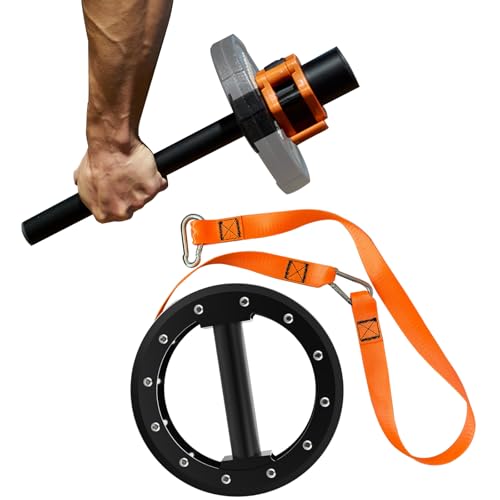
- Includes resistance band for variable loading
- Targets pronation/supination and grip endurance
- Compact metal, rubber, and silicone design
Best For: Training-focused users wanting a rotation bar with band resistance
Clinic-Style Rehab Pick – CanDo Pronation/Supination Wrist Exercise Wheel
If you want a forearm pronation supination device that feels straightforward and rehab-focused, this CanDo wheel is built for gentle wrist, forearm, and shoulder motion. It requires little strength, comes ready to use, and its off-center handlebar helps support shorter or longer rolling motions.
Best For: Early rehab, clinic-style home exercise, and users who need a simple motion-based tool.
Pros:
- Requires very little strength, making it suitable for early rehab use.
- Non-slip rubber wheel surface supports smooth, stable motion.
- Off-center handlebar accommodates different hand sizes and rolling ranges.
- Ready to use with virtually no setup required.
Cons:
- Manual wheel design offers motion training rather than adjustable resistance.
- Best suited to controlled therapeutic movement, not strength-heavy training.
This is a practical option if your priority is simple pronation and supination practice with a clinic-style feel. Its lightweight, portable design also makes it easy to keep in a home rehab routine.
Strength-Building Hybrid – PRONATOR Build Arm Strength With Dumbbells
This forearm pronation supination device is designed for users who already have dumbbells and want a harder strength challenge. The offset design is intended to make exercises significantly more demanding than traditional hand-held positions, while also supporting wrist, forearm, grip, and shoulder work.
Best For: Athletes, strength-focused users, and rehab patients who want a more challenging dumbbell-based trainer.
Pros:
- Works with any dumbbell up to 10 pounds that you already own.
- Offset design increases exercise difficulty compared with a standard grip.
- Targets wrist, forearm, grip, and shoulder strength.
- Includes resistance band compatibility for more workout options.
Cons:
- Depends on dumbbells you already have, so it is not a standalone tool.
- Better suited to strength training than very early rehab.
Choose this if you want a more versatile training tool that turns existing dumbbells into a tougher forearm and upper-arm challenge. It is especially appealing for sports like baseball, golf, and tennis, where stronger rotational control matters.
Adjustable Home Trainer – Wrist Rehabilitation Exercise Pronation and Supination
If you need a forearm pronation supination device with adjustable resistance, this home trainer is built around rehabilitation and functional movement. It is meant to help address pronation and supination problems while supporting hand function, torque rehab, and wrist strength work.
Best For: Users who want adjustable-resistance rehabilitation training at home.
Pros:
- Resistance can be adjusted quickly and easily.
- Suction cup design helps keep the trainer stable on smooth surfaces.
- Smooth, burr-free handle is designed for a comfortable grip.
- Intended for wrist joint rehab, stiffness, weakness, and upper-limb function.
Cons:
- Relies on suction-cup attachment, so surface choice matters.
- More specialized than a basic wheel-style trainer.
This is a strong fit if you want more control over training intensity without moving to a full strength device. The adjustable resistance and stable base make it useful for a range of home rehab scenarios.
Compact Forearm Builder – Marcy Wrist and Forearm Developer
Marcy Wrist and Forearm Developer/Strengthener Home Gym Gear - Wedge Multi-coloured, 9x4x1"
Check Price On AmazonThis forearm pronation supination device is really a compact wrist and forearm strengthener built for grip-focused training. It targets the forearms, wrists, and fingers with variable resistance, making it a practical home gym option for users who want adjustable arm work in a small footprint.
Best For: Home users who want a compact, adjustable forearm and grip strengthener.
Pros:
- Targets forearms, wrists, and fingers, including grip strength.
- Variable resistance system helps track progress.
- Adjustable grip supports a more precise fit.
- Compact size is easy to store at home.
Cons:
- More focused on strength development than motion-based pronation/supination drills.
- Bulkier than a simple wheel-style rehab aid.
If your goal is broader arm and grip development rather than a pure rehab motion trainer, this Marcy unit makes sense. Its adjustable resistance and compact design give it a useful place in a home gym routine.
Therapist Fabrication Kit – Rolyan Dynamic Pronation/Supination Kit
If you need a forearm pronation supination device for building therapy splints rather than direct exercise, this Rolyan kit is designed for physical and occupational therapists. It provides the parts needed to fabricate dynamic pronation or supination setups for wrist, forearm, and elbow splints, with hardware, tubing, and instructions included.
Best For: Therapists who need a kit for fabricating dynamic pronation/supination splints for patients.
Pros:
- Includes one length of tubing, two metal housings, hardware, and instructions
- Made for creating elbow, wrist, and forearm splints
- Non-latex materials
- Compact and lightweight kit for workshop use
Cons:
- Not a ready-to-wear brace or standalone exercise tool
- Requires splint fabrication skills and compatible base materials
This is a specialty clinic-oriented option, so it makes the most sense if you are assembling custom splints for rehabilitation. For hands-on therapy work, it offers the components needed to support controlled pronation and supination positioning.
Forearm Training Bar – Wrist Rotation Bar with Foam Grip
This forearm pronation supination device is built as a wrist rotation bar for controlled training and rehab-style routines. With a straight metal handle, foam grip, hanging cord, and a substantial 0.82 kg build, it is aimed at focused rotation work rather than lightweight portability.
Best For: Users who want a heavier wrist and forearm rotation bar for rehabilitation conditioning or home training.
Pros:
- Designed specifically for pronation and supination training
- 0.82 kg weight gives it a substantial feel during use
- Black foam wrapped handle helps provide a secure grip
- Hanging cord with metal connector and hook-style attachment simplifies setup
Cons:
- Heavier build may not suit users who want a lighter device
- Single-purpose design is less versatile than multi-exercise tools
For controlled wrist and forearm rotation work, this model is straightforward and purpose-built. Its weight and grip design make it a solid fit when you want a more stable feel for repeated rehab or conditioning sessions.
Support Splint Brace – Double Fixation Forearm Wrist Brace
While not a training tool, this forearm pronation supination device category fit is better understood as a support brace for keeping the wrist and forearm in a stable position. It uses a breathable neoprene blend, removable splints, and adjustable straps, so it is aimed at comfort and immobilization during recovery or nighttime wear.
Best For: Adults needing adjustable forearm and wrist immobilization support for common wrist issues.
Pros:
- Double fixation design with metal and composite splints for added stability
- Breathable, moisture-wicking neoprene blend for comfortable wear
- Removable splints allow more flexibility when needed
- Adjustable strap system works on left or right hand
Cons:
- Intended for support and immobilization, not active rotation exercises
- Size selection matters, so checking the chart is important
If your priority is stabilization rather than movement training, this brace is the more practical pick. It is built for everyday support and recovery use, with a design that favors comfort, adjustability, and firmer wrist positioning.
Stable Home Rehab Pick – Wrist Rehab Trainer with Suction Base
If you want a forearm pronation supination device for steady home rehabilitation, this trainer focuses on controlled rotation work for the wrist and forearm. Its suction cup base is meant to keep the unit stable during use, while the adjustable resistance lets you scale the challenge as your range of motion improves.
Best For: Home users recovering from wrist injuries who want a stable, adjustable rotation trainer.
Pros:
- Stable suction cup base and suction cup buttons help reduce wobble during training.
- Adjustable resistance supports gradual progression in intensity.
- Designed for rotational wrist and forearm rehabilitation work.
- Compact and lightweight for easy home storage and transport.
Cons:
- Primarily built for rehab-style rotational exercises rather than broad workout variety.
- Best suited to a stable flat surface for the suction base to work well.
This is a practical choice if your priority is controlled, repeatable pronation and supination practice at home. The comfort-focused handle and durable metal-plastic build make it a sensible everyday rehab tool.
Simple Rotation Bar – Metal Wrist Exercise Bar
This forearm pronation supination device uses a straightforward bar-and-cord setup for controlled wrist rotation training. The metal handle and foam wrap are designed to give you a secure grip, and the hanging cord with hook attachment keeps the setup practical for rehab or everyday exercise.
Best For: Users who want a simple, substantial-feeling rotation bar for controlled forearm training.
Pros:
- Metal construction gives the tool a substantial feel for focused training.
- Foam-wrapped handle offers a comfortable, secure grip.
- Hook-style cord attachment makes setup simple and practical.
- Built specifically for pronation and supination wrist rotation work.
Cons:
- Does not include adjustable resistance features in the supplied details.
- More specialized for rotation training than all-purpose forearm exercise.
If you prefer a basic tool that keeps the motion pattern clear and direct, this bar fits that role well. Its heavier, metal feel may appeal to users who want a more grounded training implement.
Forearm Strength Bundle – Rotation Trainer Set with Band
For shoppers comparing a forearm pronation supination device with a little more training flexibility, this Fitarc set combines a rotation trainer with a resistance band. It is aimed at forearm and wrist strengthening, with the band adding an easy way to vary intensity as you work on grip endurance and rotational control.
Best For: Training-focused users who want a rotation bar plus resistance-band loading.
Pros:
- Includes a resistance band for adjustable intensity by changing foot position.
- Targets forearm muscles through pronation and supination exercises.
- Designed to support grip endurance and rotational control.
- Compact single-tool setup with metal, rubber, and silicone materials.
Cons:
- Band-based resistance may feel less precise than a built-in adjustment mechanism.
- More training-oriented than a purely minimal rehab tool.
This set makes sense if you want a bit more versatility from a forearm trainer without moving to a larger system. The added band can help you scale effort while keeping the same core rotation movement.
How We Picked the Best Forearm Pronation Supination Device
We prioritized devices that support controlled pronation and supination, offer useful resistance or stabilization, and are suitable for home use or supervised rehab. We also looked for build quality, ease of setup, training versatility, and whether a model makes sense for recovery, strengthening, or both.
Because users buy a Forearm Pronation Supination Device for different goals, we favored a mix of tools: simple bars and wheels for rotation training, adjustable resistance trainers for progression, and more specialized kits for therapy or splinting needs.
Quick Comparison
In general, wheel and bar-style tools are best for straightforward rotation drills, while adjustable trainers are better if you want to scale resistance over time. Heavy-duty metal designs tend to feel more stable for regular strength work, while lightweight or support-oriented products are better suited to rehabilitation, comfort, or immobilization.
Key Buying Factors for Forearm Pronation Supination Device
Resistance and Progression
Look for a device that matches your current ability. Rehab users usually need smoother, lower-load movement, while strength-focused buyers may want higher resistance or a more demanding lever design. Adjustable resistance is useful if you expect to progress.
Stability and Control
A good device should keep motion clean and controlled without wobble. Stable bases, secure grips, and predictable rotation matter more than flashy features, especially when recovering from injury or stiffness.
Comfort and Fit
Handle shape, grip diameter, and forearm support can affect how long you can train. If you have pain, tendon irritation, or limited range of motion, comfort should rank alongside resistance.
Use Case: Rehab Vs. Strength
Choose a rehab-oriented model if your goal is restoring movement after injury, surgery, or immobility. Choose a training-focused model if you want grip, wrist, and forearm conditioning as part of a general strength routine.
Durability and Space
Metal bars, reinforced components, and solid bearings typically hold up better to repeated use. If you have limited space, compact bars or small-wheel designs are easier to store than larger station-style tools.
Who Should Buy Which Forearm Pronation Supination Device?
Beginners or rehab users should lean toward simple, stable, low-friction options that make it easy to move through a controlled range. Intermediate users who want measurable progression may prefer adjustable resistance trainers. If your priority is wrist support rather than exercise, a brace or immobilizer may be the better match. For therapists, clinics, or advanced home setups, splint-forming kits and more specialized devices can be the most versatile.
The best Forearm Pronation Supination Device is the one that fits your recovery stage, available space, and training goal. Start with control and comfort first, then move up to resistance and complexity only if you need them.