The best incline treadmills make it easier to add hill-style training, increase walking intensity, and build more variety into a home workout without relying on outdoor weather or terrain.
This roundup compares 10 options across compact walking pads, foldable home treadmills, and feature-rich machines. Consider incline range, deck space, speed, controls, and storage before choosing the right fit.
Best 10 Incline Treadmills Picks for 2026
Steep-Slope Specialist

- Five manual incline levels up to 40%
- 51-inch handrails for taller users
- 350-pound capacity with foldable frame
Best For: Steep hill-style walking and climbing workouts
Connected Training Pick
NordicTrack T Series Treadmill

- 0–10% incline and speeds up to 10 MPH
- Folding frame with KeyFlex cushioning
- Optional iFIT coaching and auto-adjustments
Best For: Running-focused home workouts with guided training
Easy-Adjust Compact Choice
WELLFIT 12% Auto Incline Treadmill

- Automatic incline from 0% to 12%
- 375-pound capacity and quiet motor
- Folds to 5.5 inches for compact storage
Best For: Small-space incline walking with simple controls
Manual Climbing Value

- Manual incline settings up to 18%
- 400-pound stated weight capacity
- Folds to about 4.1 inches high
Best For: Portable climbing and incline walking workouts
Premium Connected Pick

- Auto- and manual-incline controls
- 24-inch rotating HD touchscreen
- Supports speeds up to 12.5 mph
Best For: Immersive, coached cross-training at home
Space-Saving Incline Pick
LONTEK 15% Auto Incline Treadmill

- 12 incline levels up to 15%
- Folds away in about 10 seconds
- 0.6-7.2 mph speed range
Best For: Compact home incline walking and jogging
Compact Walking Pick
Walking Pad with Manual Incline

- Manual incline for uphill walking
- 0.6-3.8 mph speed range
- Slim, portable design with handlebars
Best For: Low-impact walking and standing-desk use
Compact Hill Training Pick
Small 12% Incline Foldable Treadmill

- 12% manual incline for hill-style workouts
- Quiet 3.0HP motor supports up to 300 pounds
- Folds compactly for apartment-friendly storage
Best For: Walkers and light runners needing compact incline training
Steep Incline Choice
LONTEK 40% Incline Walking Pad

- Five manual incline levels up to 40%
- 51-inch handrails suit taller users
- 350-pound capacity with reinforced stability features
Best For: Steep hill walking and hiking-style home workouts
Flexible Everyday Option
LONTEK 15% Incline Walking Pad
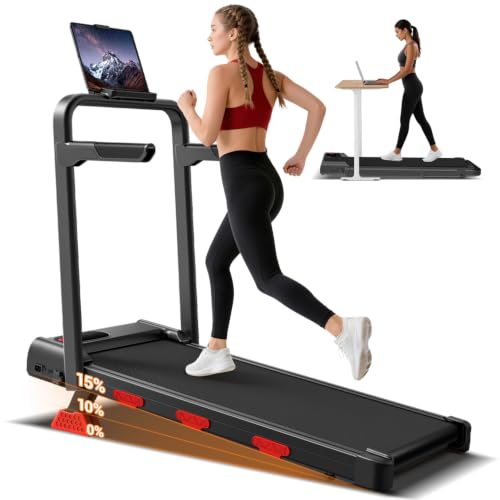
- Flat, 10%, and 15% manual incline positions
- Quiet motor and 350-pound user capacity
- Low-profile design stores under beds or desks
Best For: Everyday walking and light jogging in compact spaces
Steep-Slope Specialist – CURSOR 40% Incline Treadmill
For shoppers comparing incline treadmills, the CURSOR stands out with five manual settings reaching a steep 40% grade. Its elevated deck, extended handrails, shock-absorbing belt, and quiet brushless motor make it geared toward walking and climbing-style workouts at home.
Best For: Users who want very steep incline training, taller handrails, and a foldable home treadmill.
Pros:
- Offers 0%, 10%, 20%, 30%, and 40% manual incline settings.
- Extended 51-inch handrails and a 350-pound stated capacity support added stability.
- Quiet 3HP brushless motor, seven-layer belt, and silicone cushioning help reduce workout noise and impact.
- Folds to about 57.3 by 24.4 by 6.1 inches and includes transport wheels.
Cons:
- Incline adjustment is manual rather than automatic.
- Its stated speed range is better suited to walking, jogging, and light running than fast running.
- The steepest settings raise the deck substantially, so users should be comfortable with elevated workouts.
The CURSOR is a specialized pick among incline treadmills, especially for hill and stair-simulation sessions. Choose it if maximum incline and tall-user support matter more than automated adjustments.
Connected Training Pick – NordicTrack T Series Treadmill
The NordicTrack T Series is a conventional home treadmill with a 0–10% incline range, speeds up to 10 MPH, and folding storage. Its main advantage among incline treadmills is the optional iFIT ecosystem, which can automatically adjust speed and incline during supported trainer-led workouts.
Best For: Runners and home users who want faster speeds, guided workouts, and app-connected training.
Pros:
- Reaches 10 MPH, supporting walking, jogging, and running.
- Provides a 0–10% incline range with digital quick controls.
- iFIT features include trainer-led workouts, SmartAdjust, ActivePulse, and fitness-app syncing when membership requirements are met.
- Folding frame, assisted lowering, and KeyFlex cushioning suit regular home use.
Cons:
- Several smart features require an iFIT Train Membership.
- Its 10% maximum incline is less aggressive than the higher-incline alternatives in this roundup.
- The 203-pound treadmill is heavier and has a larger footprint than compact walking-pad designs.
The NordicTrack is the most running-oriented option here, combining a 55-inch deck with higher top speed and connected coaching. It makes sense for buyers who value structured digital training over extreme incline.
Easy-Adjust Compact Choice – WELLFIT 12% Auto Incline Treadmill
The WELLFIT adds automatic incline to a compact walking-pad-style treadmill, with adjustment from 0% to 12%. For shoppers seeking versatile incline treadmills for smaller spaces, it combines a handlebar, quiet brushless motor, multiple controls, and a foldable frame.
Best For: Beginners, older adults, and small-space users who want automatic incline and extra balance support.
Pros:
- Automatic 0–12% incline changes without manual repositioning.
- Quiet 3.5HP brushless motor and 375-pound stated capacity suit shared indoor spaces.
- Four control options include console buttons, remote, voice control, and mobile app.
- Folds to a stated 5.5-inch height and includes transport wheels for storage.
Cons:
- The 40-by-16-inch belt is more compact than the NordicTrack’s running deck.
- Its 7.6 MPH top speed may not satisfy users seeking fast running.
- Automatic incline requires electrical operation, unlike a simple manual incline mechanism.
The WELLFIT is a practical middle ground for incline treadmills: easier to adjust than manual models while remaining compact and relatively quiet. It is best suited to walking, light jogging, and routine home cardio rather than dedicated speed training.
Manual Climbing Value – LONTEK 18% Incline Treadmill
The LONTEK is a lightweight foldable option for shoppers comparing incline treadmills with manual adjustment. Included attachments provide 0%, 10%, and 18% settings, while the handlebar, shock-absorbing belt, and 7.5 MPH maximum speed support walking, climbing, jogging, and running modes.
Best For: Buyers who want a portable treadmill with stronger-than-average manual incline and a high stated weight capacity.
Pros:
- Manual incline reaches 18% using the included attachments.
- 400-pound stated capacity and handlebar provide added support for home workouts.
- Seven-layer belt, six silicone shock absorbers, and an anti-slip handle focus on comfort and stability.
- Folds to about 44.3 by 21.8 by 4.1 inches and arrives 90% pre-assembled.
Cons:
- Incline changes require manual adjustment rather than console control.
- The 15-by-37.5-inch belt is relatively short and narrow for sustained running.
- The available incline settings are limited to the stated 0%, 10%, and 18% positions.
The LONTEK offers a useful balance of steep incline, portability, and low setup effort. It is a compelling choice for climbing-style workouts and compact storage, provided the smaller belt suits your stride.
Premium Connected Pick – Peloton Treadmill
For shoppers seeking feature-rich incline treadmills, the Peloton Treadmill combines manual and auto-incline controls with guided training and a large rotating touchscreen. It is designed for running, walking, hiking, and cross-training, but its substantial size and required membership are important considerations.
Best For: Households wanting immersive, coached workouts across cardio, strength, yoga, and other training styles.
Pros:
- Manual and auto-incline controls, with speed and incline knobs for quick adjustments.
- 24-inch Full HD swivel touchscreen supports more than 15 workout types.
- Supports users up to 300 pounds and reaches speeds of 12.5 mph.
- Tracks metrics including distance, speed, calories, pace splits, heart rate zones, and elevation.
Cons:
- Peloton All-Access Membership costs $49.99 per month for full content and applicable features.
- At 258 pounds, it is extremely heavy and may require lifting aids for setup or movement.
- Requires Wi-Fi and significant clearance around and behind the treadmill.
This is the most entertainment- and coaching-focused option in the group. Choose it if interactive programming and detailed training feedback outweigh the ongoing membership cost, space requirements, and heavy setup.
Space-Saving Incline Pick – LONTEK 15% Auto Incline Treadmill
The LONTEK is one of the more compact incline treadmills for home use, offering 12 preset incline levels up to 15% and speeds up to 7.2 mph. Its quick-folding design, shock-absorbing belt, and high stated weight capacity make it practical for apartments and multipurpose rooms.
Best For: Home users who want substantial incline training, fold-away storage, and walking-to-jogging versatility.
Pros:
- Provides 12 preset incline levels from 0% to 15%.
- Folds in about 10 seconds and measures 44.8 x 23.5 x 5.40 inches when folded.
- Offers a 0.6-7.2 mph speed range and a stated 400-pound capacity.
- Includes a seven-layer belt, cushioning components, handles, tablet holder, and water bottle holder.
Cons:
- The 15.2 x 38.2-inch running belt is relatively compact for running.
- Its display is a basic three-inch LED screen rather than a large interactive console.
- The product notes contain differing capacity references, so buyers should verify the current specifications.
With a strong incline range and quick storage profile, this LONTEK suits buyers prioritizing hill-style workouts in limited space. Its shorter belt and basic display make it better suited to walking, power walking, and moderate jogging than long-stride running.
Compact Walking Pick – Walking Pad with Manual Incline
This walking pad is a compact alternative among incline treadmills, using a manual incline to add uphill effort without increasing speed. Its low maximum speed, remote control, transport wheels, and handlebar make it oriented toward walking, standing-desk use, and gentle home workouts rather than running.
Best For: Beginners, seniors, and office users who need a portable walking pad with basic incline and balance support.
Pros:
- Manual incline targets the glutes and calves while increasing walking intensity.
- Compact design measures 43.91 x 21.81 x 4.28 inches when folded.
- Remote control adjusts the 0.6-3.8 mph speed range.
- Includes stability handlebars, a five-layer non-slip belt, and shock absorption.
Cons:
- Manual incline requires physically raising the front rather than pressing an incline control.
- Maximum speed is 3.8 mph, so it is not intended for running.
- The supplied details list both a 265-pound motor support claim and a 220-pound maximum weight recommendation; verify the current limit before buying.
This model is best viewed as a portable walking solution with added uphill resistance, not a full running treadmill. It makes sense for light daily activity, desk-side walking, and users who value easy storage and handlebar stability.
Compact Hill Training Pick – Small 12% Incline Foldable Treadmill
If you want incline treadmills for home workouts without committing to a large machine, this compact model offers a 12% manual slope and speeds from 0.6 to 6.2 MPH. Its foldable, lightweight design and quiet brushless motor make it practical for apartments and smaller rooms.
Best For: Walkers and light runners who want manual incline training, basic workout tracking, and compact storage.
Pros:
- 12% manual incline helps add hill-style intensity to walking workouts.
- 3.0HP brushless motor runs below 50 dB and supports up to 300 pounds.
- Folds to about 5.5 inches high and includes transport wheels for storage.
- LED display tracks speed, time, calories, and distance, with smart memory when paused.
Cons:
- The incline is manual rather than electronically adjustable.
- The 38-by-15-inch belt may feel limiting for users who prefer a wider running surface.
- Top speed is 6.2 MPH, making it better suited to walking and light running than fast training.
This treadmill balances useful incline capability with a small footprint and straightforward controls. It is a sensible choice when easy storage and quieter indoor use matter more than high-speed running.
Steep Incline Choice – LONTEK 40% Incline Walking Pad
Among incline treadmills, this LONTEK model stands out for its five manual incline levels, reaching 40%. It combines a supportive handlebar, reinforced base, and 350-pound capacity for users who want more demanding hill walking or hiking-style cardio at home.
Best For: Taller users and home exercisers seeking steep manual incline training with extra stability.
Pros:
- Offers five manual levels from 0% to 40% for progressively harder hill workouts.
- 51-inch dual handrails and a 38.6-by-15.4-inch belt provide added support and room for taller users.
- Supports up to 350 pounds, with reinforced feet and silicone pads designed to improve stability.
- Quiet 3HP brushless motor operates below 45 dB and reaches 6.2 MPH.
Cons:
- Incline adjustments are manual, so changing levels requires stopping to reposition the deck.
- The highest incline is focused on walking and climbing rather than fast running.
- Its folded dimensions are larger than those of a low-profile walking pad.
This is the strongest option here for steep elevation work. The high incline range, longer handrails, and reinforced support make it more suitable for challenging walking sessions than casual under-desk use.
Flexible Everyday Option – LONTEK 15% Incline Walking Pad
This LONTEK walking pad is one of the more flexible incline treadmills for everyday home use, with flat, 10%, and 15% manual positions. Its low-profile frame, handles, and quiet motor make it suitable for walking, light jogging, and compact-space workouts.
Best For: Users who want simple adjustable incline levels, a 350-pound capacity, and easy storage in apartments or home offices.
Pros:
- Three manually configured positions—flat, 10%, and 15%—cover everyday walking and hill-style sessions.
- 3.0HP brushless motor runs below 45 dB and supports speeds up to 6.2 MPH.
- Supports up to 350 pounds while remaining low profile and portable.
- Multi-layer belt and side impact strips help reduce underfoot impact.
Cons:
- Incline changes require manually repositioning the support legs or pads.
- The 37.4-by-15-inch belt is relatively compact for users who take long strides.
- Only a one-year warranty is listed in the supplied details.
With three straightforward incline settings and a slim footprint, this model is a practical middle ground. It suits users who want more than flat walking but do not need the extreme 40% elevation of a dedicated hill-training machine.
How We Picked the Best Incline Treadmills
We focused on the features that matter most for home users: maximum incline, treadmill format, running surface, folding or storage design, handle support, display usability, and intended workout style. The selection includes compact walking pads for smaller rooms, foldable treadmills for general cardio, and larger machines suited to more demanding walking, hiking, or running sessions.
Because specifications and availability can vary by configuration, check the current product listing for exact speed ranges, dimensions, weight limits, warranty coverage, and included features before ordering.
Quick Comparison
| Best For | Look For | Typical Advantage |
|---|---|---|
| Small spaces | Walking pad or compact folding design | Easy storage and a smaller footprint |
| Hill walking | 12% to 18% incline | More demanding low-impact cardio |
| Advanced incline work | Very steep incline range | Stronger hiking-style training stimulus |
| Running | Longer deck and higher speed capacity | Better stride comfort and stability |
| Connected training | Integrated classes or app support | More guided workout variety |
Key Buying Factors for Incline Treadmills
Incline Range and Adjustment
A 10% to 12% incline is useful for brisk walking and moderate hill workouts, while 15% to 18% provides a steeper challenge. Models rated around 40% are aimed more at hiking-style sessions than everyday running. Confirm whether adjustment is automatic, manual, or limited to preset levels.
Deck Size, Speed, and Motor
Walkers can usually prioritize a compact deck, but runners benefit from more length and width for a natural stride. Motor output, cushioning, and frame stability also become increasingly important as speed and incline rise. A stated horsepower figure should be considered alongside the manufacturer’s recommended use and user weight capacity.
Controls, Handles, and Storage
Handlebars can improve confidence during steep incline work, particularly for older users or anyone recovering from inactivity. Look for accessible speed and incline controls, a readable display, emergency-stop protection, and a folding system that suits your available space. Measure both the operating footprint and the folded dimensions.
Comfort and Maintenance
Check the belt’s shock absorption, noise expectations, lubrication requirements, and warranty terms. A treadmill that is easy to maintain is more likely to remain reliable with frequent use.
Who Should Buy Which Incline Treadmills?
Choose a walking pad if you mainly walk, have limited space, or want to store the treadmill under furniture. Prioritize a stable handlebar when balance and support matter.
Choose a compact folding treadmill for everyday walking, light jogging, and general home cardio. A moderate incline range offers useful training without requiring the size or cost of a commercial-style machine.
Choose a higher-incline model if your goal is steep hill training, hiking preparation, or short, intense walking intervals. Verify that the frame, handles, and belt remain stable at the highest setting.
Choose a connected or full-featured treadmill if guided classes, structured programs, and running comfort are more important than the smallest possible footprint. Match the machine to your room, training goals, and realistic weekly usage rather than choosing based on incline percentage alone.