Excess humidity can make rooms feel warmer, encourage musty odors, and contribute to mold growth—but a loud appliance can be just as frustrating. The best quiet dehumidifiers balance moisture removal with low operating noise, convenient drainage, and efficient performance.
This roundup compares 10 options ranging from compact models for bedrooms and small rooms to high-capacity units designed for basements and larger areas. Use the guide below to match capacity, controls, and drainage features to your space.
Best 10 Quiet Dehumidifiers Picks for 2026
Best Large-Space Quiet Dehumidifier
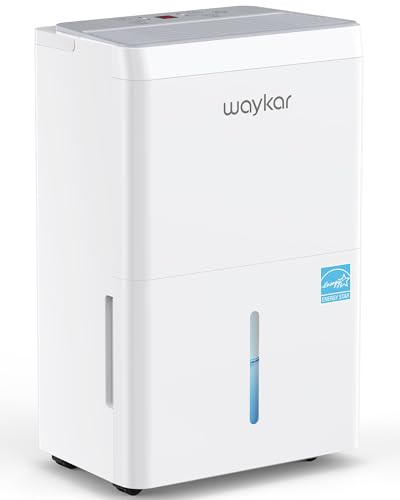
- Up to 6,000 sq. ft. coverage
- 40 dB low-speed operation
- Tank and included-hose drainage
Best For: Large basements and homes needing high-capacity moisture control
Best Energy-Saving Quiet Dehumidifier
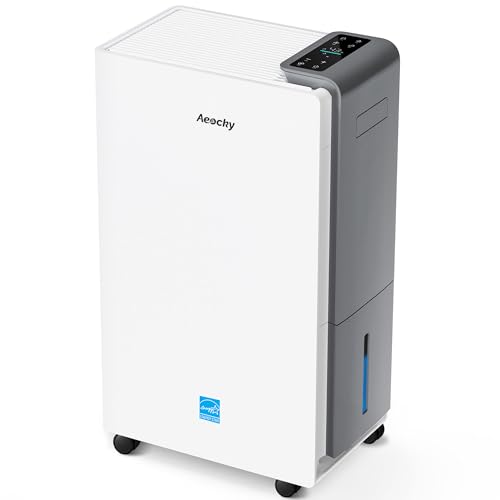
- Up to 5,500 sq. ft. coverage
- ENERGY STAR Most Efficient 2025
- Smart humidity and power-off memory
Best For: Large spaces where efficiency and precise control matter
Best Compact Quiet Dehumidifier

- Under 30 dB in sleep mode
- Compact 95-ounce removable tank
- Automatic shutoff and portable handle
Best For: Bedrooms, bathrooms, closets, and other small enclosed spaces
Best Quiet Basement Dehumidifier

- Up to 5,000 sq. ft. coverage
- Approximately 42 dB operation
- Includes hose and 24-hour timer
Best For: Basements and large areas needing balanced capacity and quieter operation
Best Compact Pick

- Below-28 dB sleep mode
- 1.3-liter removable tank
- Compact design for up to 260 sq. ft.
Best For: Small rooms, bedrooms, bathrooms, closets, and RVs
Best High-Capacity Pick
KNKA 80-Pint Basement Dehumidifier

- Up to 80 pints per day
- 40–45 dB operating level
- Tank and continuous-drain options
Best For: Large basements and high-humidity living areas
Best for Large Spaces
Quiet 4,500-Sq.-Ft. Dehumidifier

- 45–80-pint capacity for spaces up to 4,500 sq. ft.
- 40 dB operation with sleep mode
- Drain hose, adjustable airflow, and swivel wheels
Best For: Large basements, garages, gyms, and high-humidity areas
Best Energy Saver
Waykar 34-Pint Quiet Dehumidifier

- 38 dB minimum noise level
- 2025 ENERGY STAR Most Efficient certification
- 34-pint capacity with tank or hose drainage
Best For: Bedrooms, offices, and spaces up to 2,000 sq. ft.
Best Smart Controls
DREO 73-Pint Quiet Dehumidifier

- 73-pint capacity with automatic humidity control
- 41 dB operation and three fan speeds
- App control, energy monitoring, and 1.85-gallon tank
Best For: Smart-home users with basements or rooms up to 2,000 sq. ft.
Best Large-Space Quiet Dehumidifier – Waykar 120-Pint Smart Comfort
For shoppers seeking quiet dehumidifiers for a large home or basement, the Waykar offers substantial moisture-removal capacity with a listed low setting of 40 dB. Its adjustable humidity range, automatic comfort mode, and flexible drainage make it suited to extended everyday use.
Best For: Large basements, homes, laundry areas, bedrooms, and other spaces up to 6,000 square feet.
Pros:
- Removes up to 120 pints of moisture per day under specified test conditions.
- Operates at 40 dB on low and includes automatic comfort control.
- Offers tank or continuous drainage, with a hose included.
- Includes auto-defrost, overflow protection, and a 30%–80% humidity setting range.
Cons:
- Its large capacity and coverage may be more than needed for a small room.
- A longer garden hose for extended drainage must be purchased separately.
This is a strong choice when you need quiet dehumidification across a broad area rather than a compact bedside unit. The ENERGY STAR 2025 qualification and included warranty coverage add practical value for frequent operation.
Best Energy-Saving Quiet Dehumidifier – AEOCKY RHEA-001
The AEOCKY RHEA-001 is aimed at buyers who prioritize verified efficiency and precise humidity control in a large space. It carries the ENERGY STAR Most Efficient 2025 designation and is designed for homes up to 5,500 square feet.
Best For: Energy-conscious homeowners, warm damp basements, and large areas requiring precise automatic humidity management.
Pros:
- Rated for up to 80 pints per day in specified high-humidity conditions.
- Holds the ENERGY STAR Most Efficient 2025 certification noted by the manufacturer.
- Uses dynamic humidity detection and includes power-off memory for smart-plug setups.
- Designed for lower-temperature operation with dedicated defrost sensors.
Cons:
- The supplied notes do not provide a specific operating noise rating.
- Its advanced efficiency features may be unnecessary for occasional or small-room use.
Although it is positioned as an efficient large-area model, shoppers specifically comparing quiet dehumidifiers should verify the current noise specification before buying. Its strongest documented advantages are energy performance, smart control, and low-temperature capability.
Best Compact Quiet Dehumidifier – OWAAE 1000-Sq.-Ft. Model
For bedrooms, bathrooms, closets, and other enclosed areas, this compact OWAAE unit is one of the quieter dehumidifiers in the group, with sleep-mode operation under 30 dB. Its portable design and automatic shutoff make it convenient for light-duty moisture control.
Best For: Bedrooms, nurseries, bathrooms, closets, RVs, and enclosed spaces up to 1,000 square feet.
Pros:
- Sleep mode operates below 30 dB according to the supplied notes.
- Automatic shutoff helps prevent overflow when the 95-ounce tank is full or misplaced.
- Compact, lightweight design includes a built-in handle.
- Seven-color LED lighting provides optional ambient illumination.
Cons:
- Its listed moisture removal rate is 1 liter per day, so it is not intended for severe large-area humidity.
- It uses a small tank that may require frequent emptying in very humid conditions.
- The supplied voltage specification is 220 V, so buyers should confirm compatibility.
This model makes the most sense when quiet nighttime operation and portability outweigh maximum capacity. It is better suited to moderate, localized humidity than to a consistently wet basement or whole-home application.
Best Quiet Basement Dehumidifier – Waykar 80-Pint 2025
This Waykar is a practical option among quiet dehumidifiers for basements and large living areas, combining an 80-pint capacity with listed operation around 42 dB. Its auto-swing airflow, broad humidity settings, and included drain hose support longer unattended operation.
Best For: Basements, bedrooms, bathrooms, RVs, and other areas up to 5,000 square feet.
Pros:
- Rated to remove up to 80 pints per day under specified conditions.
- Operates at approximately 42 dB and includes a 24-hour timer.
- Provides 90-degree automatic airflow swing for more even circulation.
- Supports tank drainage and continuous drainage with the included hose.
Cons:
- The included tank holds 4.3 liters, which may require regular emptying without a drain setup.
- It is a large-area compressor model rather than a highly compact unit.
With a documented noise level, basement-oriented capacity, and flexible drainage, this model balances performance and comfort well. It is a sensible pick for buyers who want quieter operation without stepping down to a small-room dehumidifier.
Best Compact Pick – Quiet 44-Ounce Dehumidifier
If you need quiet dehumidifiers for a small room, this compact model emphasizes low-noise operation, simple controls, and easy placement. Its sleep mode runs below 28 dB, while the 44-ounce tank, auto shut-off, and automatic defrost make it practical for bedrooms, bathrooms, closets, RVs, and other spaces up to 260 square feet.
Best For: Small bedrooms, bathrooms, closets, dorm rooms, RVs, and other compact spaces where quiet overnight operation matters.
Pros:
- Sleep mode operates below 28 dB for less disruptive nighttime use.
- Three modes, five timer settings, and a 1.3-liter removable tank provide flexible operation.
- Automatic shut-off and auto-defrost add convenience and protection during use.
- Compact 6.56-by-4.94-by-9.29-inch design fits easily on limited floor space.
Cons:
- The 260-square-foot coverage is intended for smaller areas rather than whole-home moisture control.
- The small tank may require more frequent emptying during sustained humid conditions.
This is a sensible choice when quiet operation and portability are more important than high-capacity moisture removal. The adjustable RGB lighting is a useful extra, though it may not appeal to shoppers seeking a strictly utilitarian design.
Best High-Capacity Pick – KNKA 80-Pint Basement Dehumidifier
For large basements and expansive living areas, this KNKA model combines high moisture-removal capacity with features aimed at more convenient long-term use. It removes up to 80 pints per day under specified high-humidity conditions, offers 40–45 dB operation, and supports both tank collection and continuous drainage.
Best For: Large basements, laundry rooms, bedrooms, and living areas needing substantial moisture removal with comparatively quiet compressor operation.
Pros:
- Rated for up to 80 pints per day and listed for spaces up to 5,500 square feet.
- Built-in 1.45-gallon tank and included 6.56-foot drain hose support flexible drainage.
- 40–45 dB operation, with the option to turn off the humidity display and indicator lights.
- Auto, Dry, and Setting modes provide customizable humidity control from 30% to 80% RH.
Cons:
- The optional 2.64-gallon external tank is sold separately.
- Its larger capacity and compressor-based design are less suited to tiny rooms or highly portable use.
- The supplied details list a 220-volt rating, so electrical compatibility should be checked before purchase.
This is the strongest fit of the three for serious basement moisture control. Its 40–45 dB claim is not as quiet as a small-room thermoelectric unit, but the larger capacity, continuous-drain option, and adjustable controls make it more practical for demanding spaces.
Best Energy-Efficient Pick – Kesnos 30-Pint Ultra-Quiet Dehumidifier
This Kesnos model is a well-rounded option for shoppers seeking quiet dehumidifiers with efficient everyday operation. It removes up to 30 pints per day, is designed for spaces up to 2,500 square feet, and runs at a stated 36 dB. Energy Star certification, automatic defrost, adjustable humidity control, and continuous drainage add useful versatility.
Best For: Homes, basements, bedrooms, offices, and medium-sized areas where low noise and lower energy consumption are priorities.
Pros:
- 36 dB operation is designed to minimize disruption during sleep or work.
- 2025 ENERGY STAR certification and stated 35% lower power consumption than non-certified models.
- Four modes include Comfort, Dry, Continuous, and Turbo for different moisture-control needs.
- Includes caster wheels, a hidden handle, automatic shut-off, memory restart, and a drain hose.
Cons:
- The 0.39-gallon tank is relatively small for a unit rated at 30 pints per day, so continuous drainage may be preferable for extended use.
- Its 2,500-square-foot coverage is below the larger KNKA model’s stated area rating.
Choose this model for a balance of quiet performance, energy-conscious operation, and convenient controls. It is especially appealing when you want a portable unit for several rooms and do not need the maximum extraction capacity of a large basement model.
Best for Large Spaces – Quiet 4,500-Sq.-Ft. Dehumidifier
For shoppers comparing quiet dehumidifiers for expansive or consistently damp areas, this Energy Star-certified model combines broad coverage with library-level operation. Its 90° adjustable outlet, sleep mode, and continuous-drain option make it practical for basements, garages, laundry rooms, and other large spaces.
Best For: Large basements, garages, gyms, and homes needing high-capacity moisture removal with minimal operating noise.
Pros:
- Removes 45–80 pints of moisture and covers up to 4,500 square feet.
- Operates at a stated 40 dB, with a sleep mode for quieter nighttime use.
- Includes a 1.72-gallon tank, drain hose option, 90° airflow adjustment, and swivel wheels.
- Energy Star certified with auto defrost and overload protection.
Cons:
- Its large-capacity design may be more than needed for small rooms.
- The water tank still requires emptying if you do not use continuous drainage.
This is a strong choice when coverage and quiet operation matter equally. The combination of high moisture-removal capacity, targeted airflow, and flexible drainage is especially useful for large or persistently humid areas.
Best Energy Saver – Waykar 34-Pint Quiet Dehumidifier
The Waykar 34-pint model is a compact option for shoppers seeking quiet dehumidifiers for bedrooms, offices, living rooms, or medium-size basements. It combines a stated 38 dB minimum noise level with 2025 ENERGY STAR Most Efficient certification and two drainage choices.
Best For: Medium-size homes and rooms where low noise, lower energy use, and easy drainage are priorities.
Pros:
- Removes up to 34 pints daily and is rated for spaces up to 2,000 square feet.
- Minimum stated noise level of 38 dB, suitable for bedrooms and nighttime use.
- 2025 ENERGY STAR Most Efficient certification, plus DOE and TUV certifications.
- Offers a 0.62-gallon tank or included 3.3-foot hose for drainage.
Cons:
- The smaller 0.62-gallon tank may require frequent emptying during very humid conditions.
- Only two fan speeds are provided.
Choose this Waykar when efficiency and compactness are more important than maximum capacity. Its low stated noise level and automatic safety features make it a practical fit for occupied rooms, while continuous drainage can reduce maintenance.
Best Smart Controls – DREO 73-Pint Quiet Dehumidifier
For shoppers who want quiet dehumidifiers with remote control, the DREO combines 73-pint moisture removal with app-based monitoring and adjustment. Its stated 41 dB operation, large 1.85-gallon tank, and included drain hose suit basements, bedrooms, and larger rooms.
Best For: Users who want high-capacity dehumidification, app control, and fewer tank refills in spaces up to 2,000 square feet.
Pros:
- Removes up to 73 pints per day and includes automatic humidity control.
- Runs at a stated 41 dB and offers three fan speeds, a timer, and child lock.
- Large 1.85-gallon tank can run for up to 15 hours without constant refills.
- DREO app enables remote humidity adjustments and energy-use monitoring.
Cons:
- At 33 pounds, it is heavier than compact-room models.
- Its smart-app features may be unnecessary for shoppers wanting simple manual controls.
- The listed coverage is up to 2,000 square feet despite the high 73-pint rating.
The DREO stands out for combining strong moisture removal with connected controls and a relatively quiet operating profile. It is a good fit when you want to monitor humidity and power costs remotely, particularly in a basement or large living area.
How We Picked the Best Quiet Dehumidifiers
We compared these models by advertised coverage area, moisture-removal capacity, noise claims, energy-efficiency certifications, tank size, drainage options, and automatic controls. We also considered practical features such as sleep modes, auto shutoff, adjustable humidity settings, timers, defrost functions, and smart connectivity.
Because manufacturer capacity ratings can vary with temperature and humidity, treat square-foot coverage as a starting point rather than a guarantee. A damp basement, poorly ventilated room, or space with water intrusion may require more capacity than a similarly sized dry living area.
Quick Comparison
| Best For | Look For | Models in This Roundup |
|---|---|---|
| Small bedrooms and offices | Compact design, sleep mode, auto shutoff | 44-ounce compact model; 1,000-square-foot model |
| Medium rooms and apartments | About 30–34 pints per day, quiet operation | 30-pint and Waykar 34-pint models |
| Large rooms or basements | High pint rating, continuous drainage, large coverage | Waykar, AEOCKY, KNKA, and 4,500–5,500-square-foot models |
| Smart or connected control | App support, scheduling, humidity monitoring | DREO smart dehumidifier |
Key Buying Factors for Quiet Dehumidifiers
Noise Level
For bedrooms, nurseries, and workspaces, prioritize a stated noise rating around 40 dB or lower, along with a sleep mode. Fan speed, compressor cycling, room acoustics, and floor vibration can make real-world sound different from the advertised figure.
Capacity and Room Size
Compact units suit localized moisture problems, while 30-pint models are more appropriate for typical bedrooms, apartments, and moderately damp rooms. For basements or larger areas, consider 34-pint and higher-capacity units, especially when humidity remains high for long periods.
Drainage and Tank Size
A larger tank reduces emptying frequency, but continuous drainage is usually more convenient for a basement. Confirm that the included hose fits your setup and that the drain outlet can use gravity drainage or a pump if necessary.
Controls and Energy Use
Humidity sensors, automatic shutoff, adjustable target humidity, timers, and restart memory make daily use easier. Energy Star certification can help reduce operating costs, but actual consumption depends on runtime, room conditions, and settings.
Who Should Buy Which Quiet Dehumidifiers?
Choose a compact model for a bedroom, bathroom, office, or other small area where portability and low noise matter most. Choose a 30- or 34-pint unit for medium rooms or moderately damp homes that need regular moisture control without a large footprint.
Choose a high-capacity basement model if you are managing persistent dampness, laundry-room moisture, or a large open floor plan. Prioritize continuous drainage and a reliable humidity setting over decorative extras. Choose a smart model if remote monitoring, schedules, and app-based adjustments will help you maintain consistent humidity.
Whichever model you select, place it with clear airflow around the intake and exhaust, keep doors and windows closed while it operates, and address leaks or water intrusion separately. A dehumidifier can control indoor moisture, but it cannot replace proper waterproofing or ventilation.