If you’re dealing with tennis elbow, the right rehab gear can make daily tasks feel manageable again while helping you rebuild strength safely. The best tools support controlled loading, grip work, and gradual recovery.
Below, we focus on practical tennis elbow rehab equipment that can help with pain relief, tendon care, and forearm conditioning without overcomplicating your routine.
Best 10 Tennis Elbow Rehab Equipment Picks for 2026
Runner-Up
THERABAND Red FlexBar for Rehab and Grip

- 10 lb resistance suits beginners
- Builds grip, wrist, and forearm strength
- Portable, compact rehab tool
Best For: Beginners starting tennis elbow rehab
Most Versatile
IronMind Expand-Your-Hand Bands 10 Pack

- Focuses on extensors and hand balance
- Five color-coded resistance levels
- Latex-free 10-band set
Best For: Extensor-focused hand rehab and repetitive stress relief
Best Value Pack
THERABAND FlexBar Red/Green Two-Pack

- Includes 10 lb and 15 lb bars
- Textured rubber surface for grip
- Portable rehab tool with progression
Best For: Gradual progression in elbow rehab
Quick Rehab Bar
DMoose Fitness Flex Resistance Bar
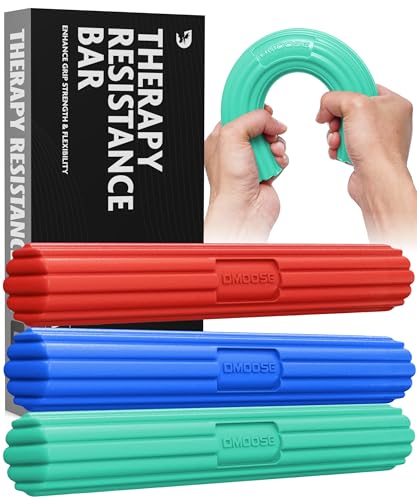
- 3-minute daily routine focus
- 4 resistance levels for progression
- Non-slip bar for grip and forearm work
Best For: At-home tennis elbow rehab with simple progression
Classic Twist Bar

- Durable rubber bar for bending and twisting
- Four resistance levels from extra light to heavy
- Ridges on the bar improve grip
Best For: Portable rehab for elbow, forearm, and shoulder overuse
Value 3-Pack

- Three bars for progressive rehab
- Odorless silicone with non-slip ridges
- Compact and portable for travel or office use
Best For: Progressive flex-bar rehab in a portable 3-piece set
Heavy-duty rehab pick
Heavy Therapy Bar for Wrist and Elbow Strength

- Heavy resistance for rehab work
- Supports grip, wrist, and elbow training
- Latex-free, compact, non-slip design
Best For: People wanting a single heavy therapy bar for elbow and grip strengthening
Progression-friendly set
Color-Coded Therapy Bars for Progressive Rehab

- Four resistance levels from 6 to 25 lbs
- Includes an exercise manual
- Non-slip design for hands and wrists
Best For: Users who want a multi-level therapy bar set for gradual rehab
Guided progression set
Resistance Bars for Gradual Rehab

- Four levels from 6 to 25 lbs
- Exercise manual included
- Supports grip and forearm strengthening
Best For: People who want guided rehab with easy resistance progression
Runner-Up – THERABAND Red FlexBar for Rehab and Grip
For tennis elbow rehab equipment, this THERABAND FlexBar is a simple, portable option for rebuilding grip, wrist, and forearm strength. Its red 10 lb resistance gives beginners a manageable starting point for controlled bending and twisting drills at home, work, or the gym.
Best For: Beginners and rehab users who want a light-resistance flex bar for tennis elbow, golfer’s elbow, and forearm recovery.
Pros:
- 10 lb red resistance is a beginner-friendly rehab level
- Supports grip, wrist, and forearm strengthening
- Compact, lightweight, and easy to use anywhere
- Available in multiple resistance levels for progression
Cons:
- Single light resistance may be too easy for advanced users
- Designed for exercise routines rather than passive support
Overall, this is a well-known therapy tool if you want a straightforward entry point into elbow rehab work. It fits users who need a portable, controlled way to build strength gradually.
Most Versatile – IronMind Expand-Your-Hand Bands 10 Pack
If you want tennis elbow rehab equipment that focuses on balance as well as strength, these hand bands are built around extensors. They’re meant to help prevent, reduce, or address issues tied to repetitive stress, while offering multiple resistance levels for structured hand training.
Best For: Users who want extensors-focused hand rehab bands for tennis elbow, carpal tunnel, or repetitive stress work.
Pros:
- Targets hand extensors to promote muscle balance
- Five color-coded resistance levels for easy progression
- 10-band pack provides lots of training flexibility
- Latex-free, durable material that’s made in the USA
Cons:
- Focuses on finger and hand work rather than wrist leverage exercises
- May feel basic if you want a single all-in-one therapy tool
This is a practical pick if your rehab plan emphasizes hand opening strength and repeated light exercise. The range of resistance options makes it easy to adjust as your grip work improves.
Heavy-Duty Pick – Flex Therapy Bar Strengthener, Extra Heavy 35 lb
For tennis elbow rehab equipment with more resistance, this flex therapy bar is aimed at users who want a stronger challenge. It’s compact and portable, and the TPR material is latex-free with a wide temperature range and stable resilience for forearm and wrist exercises.
Best For: Intermediate or advanced users who want a heavier flex bar for wrist, forearm, and grip training.
Pros:
- Extra-heavy 35 lb resistance for a bigger training challenge
- Portable design works at home, in the gym, or while traveling
- Latex-free TPR material with good resilience
- Built to support wrist, forearm, and grip exercises
Cons:
- Heavy resistance may be too much for early rehab stages
- Product details list a very large item weight, which may be a listing error
This bar makes sense if you’ve already built some tolerance and want to keep progressing. It’s less about gentle recovery and more about pushing strength work once you’re past the earliest stage.
Best Value Pack – THERABAND FlexBar Red/Green Two-Pack
This THERABAND FlexBar set is a strong choice if you want tennis elbow rehab equipment with built-in progression. The two included resistance levels let you start lighter and move up as your grip, wrist, and forearm work improves, without changing products.
Best For: Rehab users who want a two-level FlexBar set for gradual progression in tennis elbow and golfer’s elbow training.
Pros:
- Includes red 10 lb and green 15 lb bars for progression
- Used by physical therapists for grip and arm mobility work
- Durable dry natural rubber with a textured, non-slip surface
- Portable and easy to use at home, work, or the gym
Cons:
- Only two resistance levels in the set
- Still limited to flex-bar style exercises rather than a broader rehab kit
For users who want a simple step-up path, this multipack is especially practical. It covers early rehab and the next training stage in one package, which helps keep recovery routine and predictable.
Quick Rehab Bar – DMoose Fitness Flex Resistance Bar
If you want tennis elbow rehab equipment that keeps things simple, this DMoose flex resistance bar is built around short daily sessions and progressive resistance. It’s designed for tennis elbow, golfer’s elbow, tendonitis relief, and forearm strengthening, with a non-slip, odorless build that works for rehab or light training.
Best For: Quick at-home rehab and grip-strength work with easy resistance progression.
Pros:
- Claims relief in about 3 minutes a day for tennis elbow, golfer’s elbow, and tendonitis
- Includes 4 color-coded resistance levels for gradual progression
- Non-slip ergonomic design aimed at grip, wrist, and forearm work
- Comes with a step-by-step workout guide
Cons:
- Focused on bar-based bending work, so it won’t replace a full therapy program
- Resistance options may feel basic if you want a broader rehab kit
Overall, this is a practical pick if you want a straightforward rehab tool that doubles as a grip and forearm strengthener. The short routine, simple progression, and included guide make it easy to use consistently.
Classic Twist Bar – Body Sport Twist & Flex Bar
This Body Sport twist & flex bar is a solid option if you’re shopping for tennis elbow rehab equipment that emphasizes controlled bending and twisting exercises. It’s made from durable dry natural rubber, has outer ridges for grip, and comes in four resistance levels for gradual rehab work.
Best For: Users who want a durable, portable twist bar for forearm and elbow rehab.
Pros:
- Built for tennis elbow, golfer’s elbow, tendonitis, and other arm or shoulder overuse issues
- Durable rubber construction supports repeated bending and oscillating exercises
- Outer ridges help improve grip during rehab routines
- Four progressive resistance levels suit different strength stages
Cons:
- Single-bar format may be too limited for users wanting multiple rehab tools
- Resistance is fixed by color, so you’ll need to choose the right level up front
As a no-frills rehab bar, this model covers the essentials well: portability, progressive resistance, and a shape made for twist-and-flex training. It’s a dependable choice for steady elbow and forearm recovery work.
Value 3-Pack – FlintRehab Flex Bars 3 Pack
For buyers comparing tennis elbow rehab equipment, this FlintRehab flex bar set stands out because it includes three resistance bars instead of one. The odorless silicone build, ridged non-slip grip, and compact size make it a practical option for twist, flex, and bend exercises at home, at work, or while traveling.
Best For: Anyone who wants a portable 3-bar set for progressive hand, wrist, and elbow rehab.
Pros:
- Includes three resistance bars for progressive training
- Odorless silicone construction with a non-slip ridged design
- Targets hands, wrists, forearms, and elbows with twist and bend exercises
- Lightweight and easy to carry for use at home, in the office, or on the go
Cons:
- No single-bar simplicity if you only want one basic rehab tool
- Best suited to users who specifically want flex-bar style exercises
This set is a strong pick if you want a more flexible progression path than a single resistance bar can offer. The three-bar format makes it easier to scale rehab work while keeping the setup compact and portable.
Heavy-duty rehab pick – Heavy Therapy Bar for Wrist and Elbow Strength
If you want tennis elbow rehab equipment that does more than just target the elbow, the Vive Flex Therapy Bar is built to work the wrist, forearm, hand, and fingers together. It’s designed for twist-based exercises that can support tendonitis relief, grip-strength work, and general rehab routines, whether you’re training with a therapist or on your own.
Best For: Users who want a simple heavy-resistance therapy bar for elbow, wrist, and grip strengthening.
Pros:
- Targets hand, wrist, elbow, and finger strength in one tool
- Non-slip ridged surface for a secure grip
- Latex-free TPR construction and compact 12″ size
- HSA/FSA eligible with a 60-day guarantee
Cons:
- Only one heavy resistance option is listed
- May be more than some beginners need
Overall, this is a practical pick if you want a focused, travel-friendly therapy bar for structured rehab and grip work. Its straightforward design keeps the emphasis on repetitive strengthening rather than extra features.
Progression-friendly set – Color-Coded Therapy Bars for Progressive Rehab
For tennis elbow rehab equipment with built-in progression, this FitBeast set gives you four resistance levels so you can move from light to heavier work as tolerated. It’s aimed at tennis elbow, golfer’s elbow, tendonitis, and grip-strength training, with an included exercise manual to help guide your routine.
Best For: People who want multiple resistance levels for gradual rehab and strength progression.
Pros:
- Four color-coded resistance levels from 6 to 25 lbs
- Designed for elbow, wrist, forearm, and hand strengthening
- Includes a detailed exercise manual
- Non-slip ergonomic design for comfortable use
Cons:
- Set is bulkier than a single-bar option
- Needs a bit more space for storage and organization
This set makes sense if you want room to progress without replacing equipment later. The range of resistance levels and guided workouts make it easier to keep rehab structured and scalable.
Guided progression set – Resistance Bars for Gradual Rehab
This FitBeast set is another strong option for tennis elbow rehab equipment if you want to build up slowly across several resistance levels. It’s designed for tennis elbow, golfer’s elbow, and tendonitis, and the notes emphasize short daily sessions, grip strengthening, and an included guide to help you follow a simple routine.
Best For: Buyers looking for a guided, progressive therapy-bar set with multiple resistance options.
Pros:
- Four resistance levels from 6 to 25 lbs
- Includes a detailed exercise manual
- Built for grip, wrist, forearm, and elbow work
- Non-slip ergonomic shape for controlled twisting exercises
Cons:
- Very similar to other FitBeast therapy-bar sets
- May be more than needed if you only want one resistance level
As a rehab-focused set, this one is aimed at consistency and progression rather than complexity. If you want a simple way to follow a structured strengthening plan, the multiple levels and included guide are the main advantages.
How We Picked the Best Tennis Elbow Rehab Equipment
We focused on Tennis Elbow Rehab Equipment that is widely used for forearm strengthening, grip training, and tendon loading. Priority went to tools with clear rehabilitation use cases, adjustable difficulty, comfortable materials, and formats suitable for home exercise.
We also looked for options that fit different recovery stages, from gentle mobility and pain management to heavier resistance work for rebuilding capacity.
Quick Comparison
Most of the products in this roundup fall into two main categories: flex bars for twisting and eccentric forearm work, and hand or grip trainers for improving grasp strength. Flex bars are typically better for tennis elbow-specific loading, while grip tools are useful for broader hand and forearm conditioning.
Key Buying Factors for Tennis Elbow Rehab Equipment
Resistance Level
Choose a resistance level that matches your current pain and strength. Too much resistance can irritate symptoms; too little may not provide enough training stimulus. Beginners usually do better with lighter bars or gentler hand exercisers.
Exercise Type
Some rehab tools emphasize twisting motions, while others focus on squeezing or extension work. For tennis elbow, controlled eccentric and rotational exercises are often especially useful because they target the forearm tendons involved in the condition.
Material and Grip Comfort
Look for non-slip, odorless, and easy-to-hold materials if you plan to train regularly. Comfort matters because consistent use is more important than flashy features in rehab.
Progression and Versatility
Good Tennis Elbow Rehab Equipment should let you progress over time. Multi-level sets or products available in different resistances can help you move from pain reduction to strength rebuilding without replacing your gear too soon.
Use Case
If your main goal is tennis elbow relief, a flex bar is usually the most direct choice. If you also want general grip improvement for sports, work, or daily hand function, pairing a flex bar with a grip-focused tool can be a smart approach.
Who Should Buy Which Tennis Elbow Rehab Equipment?
Choose a lighter rehab bar or a gentler grip tool if you’re early in recovery, highly sensitive, or returning after a flare-up. Pick a medium or heavy resistance option if you already tolerate loading well and want to rebuild forearm endurance.
For most buyers, the best setup is one primary flex bar for targeted rehab plus one complementary hand-strength tool for overall forearm and grip conditioning. That combination covers both symptom management and long-term resilience.