Finding the right upright walker can make indoor mobility feel steadier, more comfortable, and less tiring. The best options support a more natural posture while still fitting through hallways, doorways, and tight rooms.
This roundup highlights the best upright walkers for indoor use in 2026, focusing on stability, adjustability, compact design, and day-to-day convenience for home use.
Best 10 Upright Walkers for Indoor Use Picks for 2026
All-Terrain Comfort
Helavo Upright Walker with Seat

- Padded armrests support a more natural walking posture.
- 10-inch rubber front wheels add cushioning and durability.
- Includes seat, backrest, cup holder, and cane holder.
Best For: Indoor users who also want dependable outdoor performance.
Narrow Space Bariatric

- Width adjusts down to 18 inches for tighter spaces.
- Heavy-duty frame supports up to 450 lbs.
- Removable armrests and folding design add flexibility.
Best For: Narrow hallways, doorways, and compact indoor spaces.
Comfort Seat Stand-Up

- Padded arm support and memory foam seat boost comfort.
- 360° swivel 8-inch wheels help with smooth maneuvering.
- Dual height adjustment fits many user heights.
Best For: Comfort-focused users who want a seat and easy maneuverability.
Compact Forearm Support

- Light 11 lb aluminum frame is easy to manage.
- Soft removable arm rests support upright posture.
- Folds with a simple 2-button mechanism.
Best For: Lightweight home use and easy storage.
Best Posture-Focused Pick
Vive Mobility Upright Walker with Seat

- Adjustable height from 45" to 52"
- Forearm pads and contoured armrests reduce pressure
- 8" flat-free wheels and a 17.5" seat
Best For: Users who want posture support and seated rest in an upright rollator
Most Comfortable Arm Support
VOCIC Z22 GelSoft Upright Walker
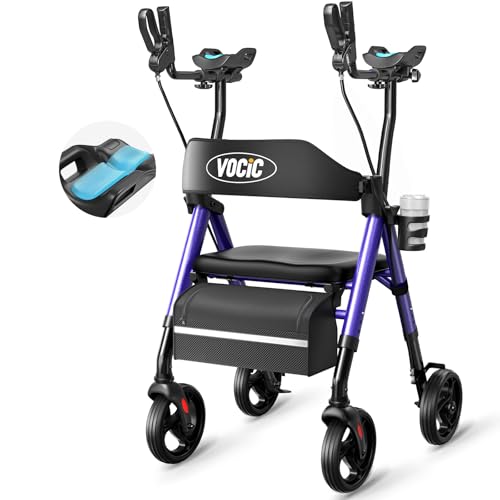
- GelSoft armrests reduce elbow pressure
- 8" wheels and 360° steering improve maneuvering
- Reinforced frame supports up to 300 lb
Best For: Users who want cushioned arm support and an adjustable upright fit
Best Value Folding Option
Folding Walker with Armrest Pad Upright Walker

- Supports up to 300 lb with a reinforced aluminum frame
- One-step fold helps with storage and transport
- 7-level leg and 4-level armrest adjustment
Best For: Shoppers who want a simple, foldable upright walker for home use
Premium Tall Upright Support
Upright Walkers for Seniors with Seat, 10" All Terrain Wheels

- Contoured elbow support reduces upper-body strain.
- Adjustable seat and handles fit 5'5" to 6'5" users.
- Foldable frame supports up to 300 lbs.
Best For: Tall seniors who want adjustable upright support with a seat.
Heavy-Duty Forearm Walker
Vive Bariatric Upright Walker for Seniors (400 lb)- Stand Up Walker w/Seat

- Heavy-duty frame supports up to 400 lbs.
- Adjustable handles and contoured armrests improve fit.
- Padded seat and tote add comfort and storage.
Best For: Users who want bariatric stability with forearm support.
All-Terrain Comfort – Helavo Upright Walker with Seat
If you want upright walkers for indoor use but also need a model that can handle outdoor ground confidently, this Helavo option is built around posture support and comfort. The padded armrests and height-adjustable handles help you walk in a more natural position, while the seat, backrest, and storage extras add everyday convenience.
Best For: Users who want an upright walker with seat support, padded armrests, and a sturdy frame for both indoor and outdoor use.
Pros:
- Padded armrests and ergonomic handles help reduce shoulder, back, and upper-body strain.
- 10-inch rubber front wheels offer cushioning and puncture-proof durability.
- Includes a cushioned seat, adjustable backrest, cup holder, and cane holder.
- 300 lb capacity with an aluminum frame and parking brake for added safety.
Cons:
- Larger 26.4-inch width may feel bulky in tighter indoor spaces.
- At 22.7 lbs, it is not the lightest option to lift or transport.
- Designed as an all-terrain model, so it may be more than some indoor-only users need.
This is a practical pick if comfort and posture support matter most and you want one walker that can do more than hallway duty. Its wider frame and larger wheels make it especially appealing for users who value stability and versatility.
Narrow Space Bariatric – Folding Upright Walker
For shoppers comparing upright walkers for indoor use in tighter rooms and doorways, this narrow folding design stands out for adjustability. Its width control, removable armrests, and one-touch folding make it a flexible option for home use where space is limited.
Best For: People who need a narrow, heavy-duty upright walker that can fit through tight indoor spaces.
Pros:
- Width adjusts from 18 to 22 inches, with an 18-inch narrowest setting for easier passage.
- Supports up to 450 lbs with an H-frame for heavy-duty stability.
- Removable, adjustable armrests and 10 height positions improve fit and comfort.
- Folds quickly with a one-touch mechanism for storage or transport.
Cons:
- Does not include a seat, so it is less suited to resting during longer outings.
- Standard walker style may not appeal to users who want a full rollator setup.
- At 11 lbs, it is portable, but the heavy-duty build still focuses more on support than extra features.
This is a strong fit for users who prioritize maneuverability in cramped interiors without giving up load capacity. The adjustable width is the key feature if your main concern is navigating hallways, doorways, and small rooms.
Comfort Seat Stand-Up – HOMLAND Upright Walker
This HOMLAND model is a good match if you want upright walkers for indoor use with more of a sit-to-stand feel and extra comfort features. The adjustable padded arm support, memory foam seat, and swivel wheels are designed to make moving around the house feel smoother and more supported.
Best For: Seniors who want a comfortable upright walker with a seat and easy indoor maneuverability.
Pros:
- Adjustable padded arm support helps you stand upright and look ahead.
- Extra-wide memory foam seat and breathable backrest improve comfort.
- 360° swivel 8-inch puncture-proof wheels support smooth movement indoors and outdoors.
- Dual height adjustment fits a wide range of users from 4’9″ to 6’4″.
Cons:
- At 24.5 lbs, it is relatively heavy compared with lighter compact walkers.
- Wider frame may be less convenient in very tight indoor paths.
- Assembly is tool-free, but the larger feature set may be more than some simple indoor users need.
Overall, this is a comfort-first option with enough adjustability to suit a broad range of users. It makes sense for anyone who wants a seated upright walker with steady support and easy rolling at home.
Compact Forearm Support – Medline Upright Walker
If you need upright walkers for indoor use that feel simple, light, and easy to store, this Medline forearm walker is a practical choice. Its compact aluminum frame, removable arm rests, and foldable design make it well suited to everyday home mobility and short trips.
Best For: Users who want a lightweight, compact upright walker with forearm support for home use.
Pros:
- Weighs just 11 lbs, making it easy to handle and transport.
- Soft removable arm rests and adjustable handles support a more natural posture.
- Folds open and closed with a simple 2-button mechanism.
- Height-adjustable legs and walker glides help it move smoothly over surfaces.
Cons:
- Does not include a seat for resting.
- 5-inch dual wheels may be less cushioned than larger-wheeled upright walkers.
- Compact design prioritizes ease of use over extra comfort features.
This model is a straightforward pick for shoppers who value portability and a lighter feel in the home. It is especially appealing if you want a foldable walker that supports a more upright posture without adding bulk.
Best Posture-Focused Pick – Vive Mobility Upright Walker with Seat
If you want upright walkers for indoor use that make it easier to stand tall while moving around the house, this Vive model is a practical option. Its forearm pads, adjustable handles, and stable 8-inch flat-free wheels are designed to support a more natural walking position and reduce strain on the hands, wrists, and neck.
Best For: Adults who want a height-adjustable upright rollator for indoor mobility, posture support, and occasional seated rest.
Pros:
- Adjustable handle height from 45″ to 52″ helps fit a wide range of users.
- Forearm pads and contoured armrests help distribute pressure more evenly.
- 8″ flat-free wheels add stability on many surfaces.
- Includes a 17.5″ wide seat and detachable shoulder bag for convenience.
Cons:
- At 20 pounds, it may feel heavy compared with simpler walkers.
- Maximum height is better suited to users within the stated range.
This is a solid choice if posture support matters as much as basic walking assistance. It blends indoor-friendly stability with a foldable frame and seat, making it useful for everyday movement around the home.
Most Comfortable Arm Support – VOCIC Z22 GelSoft Upright Walker
For shoppers comparing upright walkers for indoor use, the VOCIC Z22 stands out for its GelSoft armrests and adjustable support features. It is built to make standing and walking feel smoother, with a reinforced frame, 8-inch wheels, and a compact turning setup that can help in tighter spaces.
Best For: Adults who want a comfortable upright walker with cushioned arm support and easy height adjustments.
Pros:
- GelSoft armrests add soft, pressure-dispersing cushioning.
- Flip-out armrest design adds extra seat width and support flexibility.
- 8″ wheels and 360° front steering help with maneuvering.
- 300 lb capacity and thicker aluminum tubes improve durability.
Cons:
- Requires sufficient hand grip strength and upper body mobility.
- Uses a hand-brake system only, with no foot brake.
This model makes a strong case if arm comfort is your top priority. The combination of cushioned support, adjustable fit, and stable construction makes it a well-rounded option for everyday walking assistance.
Best Value Folding Option – Folding Walker with Armrest Pad Upright Walker
If you need upright walkers for indoor use with a simple folding design, this model is built for everyday home mobility. It focuses on practical support with padded forearm rests, height adjustment, and dual 5-inch wheels that are meant to roll smoothly across indoor floors.
Best For: Adults looking for a straightforward upright walker with padded arm support and easy storage.
Pros:
- Reinforced aluminum frame supports up to 300 lbs.
- One-step folding design makes storage and transport easier.
- 7-level leg adjustment and 4-level armrest adjustment help dial in fit.
- Dual 5-inch wheels are suitable for indoor floors and everyday movement.
Cons:
- Maximum height of 36″ may limit taller users.
- Fewer comfort and accessory features than some premium upright rollators.
This is a straightforward pick if you want a no-fuss walker for home use. It emphasizes adjustability, folding convenience, and stable arm support rather than extra add-ons.
Premium Tall Upright Support – Upright Walkers for Seniors with Seat, 10" All Terrain Wheels
If you want upright walkers for indoor use that still feel stable and comfortable, this model stands out for its adjustable arm support and seat height. The upright frame encourages a more natural walking posture, while the foldable design makes it practical for moving between rooms or storing when not needed.
Best For: Taller users who want a foldable upright rollator with seat support and easy posture correction.
Pros:
- Contoured elbow support helps reduce wrist and shoulder strain.
- Dual-adjustable seat and handles suit a wide height range from 5’5″ to 6’5″.
- Thick breathable seat, wide backrest, cup holder, and storage bag add comfort for breaks.
- Foldable aluminum frame supports up to 300 lbs while staying portable.
Cons:
- At 21.6 lbs, it is not the lightest option to lift frequently.
- Its 10-inch front wheels are designed for all-terrain travel, so the setup is more than many indoor-only users need.
Overall, this is a strong pick if posture support matters and you want a walker that can handle indoor mobility plus occasional outdoor use. The adjustable fit and padded resting points make it especially appealing for users who spend a lot of time on their feet.
Heavy-Duty Forearm Walker – Vive Bariatric Upright Walker for Seniors (400 lb)- Stand Up Walker w/Seat
For upright walkers for indoor use that prioritize stability, this bariatric model offers a wider base, forearm support, and a strong frame. It is built to help users stand taller and move more naturally, while the flat-free tires and folding frame make it versatile around the home and beyond.
Best For: Heavier users who need a sturdy upright walker with forearm support and a higher weight limit.
Pros:
- Supports up to 400 lbs with a heavy-duty aluminum frame.
- Adjustable handles from 40″ to 50″ help dial in a better fit.
- Contoured armrests, ergonomic grips, and loop brakes improve control.
- Padded seat and under-seat tote add comfort and everyday convenience.
Cons:
- At about 25 lbs, it may be cumbersome for some users to lift.
- The extra-wide frame may feel bulky in tighter indoor spaces.
This is a practical choice if you need more load-bearing confidence than a standard rollator provides. The combination of forearm support, seat comfort, and folding storage makes it a solid fit for users who value durability and posture support.
Lightweight Foldable Rollator – BlessReach Heavy Duty Upright Rollator Walker for Seniors with Seat, Purple
If you are comparing upright walkers for indoor use and want something easy to manage day to day, this BlessReach rollator combines a supportive upright posture with a lighter frame. It uses padded armrests and six handle adjustments to help shift weight off the shoulders, back, and arms, while still offering the convenience of a seat and folding design.
Best For: Seniors who want a lighter upright rollator with easy folding and everyday comfort.
Pros:
- Soft padded armrests and adjustable handles support a more natural posture.
- Light 21 lb frame folds quickly with quick-release levers.
- 8″ all-terrain wheels and 360° swivel fronts help with maneuvering.
- Thick seat, breathable backrest, cup holder, and large bag add convenience.
Cons:
- The height range listed in the notes is inconsistent, so fit should be double-checked.
- 8-inch wheels are versatile, but the design is still more rollator-like than a compact indoor walker.
In practice, this model works well for users who want upright support without a heavy, bulky feel. The quick folding system and lighter weight are especially useful if you need a walker that can be moved or stored often.
How We Picked the Best Upright Walkers for Indoor Use
We focused on Upright Walkers for Indoor Use that balance posture support, maneuverability, and ease of storage. Priority went to models with adjustable armrests, reliable braking systems, appropriate seat support, and frame widths that suit tighter living spaces. We also considered weight capacity, wheel size, and build quality, since these factors affect everyday confidence indoors.
Quick Comparison
When comparing upright walkers, look first at width and turning radius, then at arm height range, seat comfort, and weight capacity. Narrower frames are often better for apartments and smaller homes, while wider or bariatric designs may offer more stability for users who need extra support. Larger wheels can roll more smoothly over thresholds, but compact dual-wheel designs may be easier to control in hallways and kitchens.
Key Buying Factors for Upright Walkers for Indoor Use
Fit and Adjustability
A proper fit matters more than almost anything else. The armrests should allow your elbows to rest at a natural angle, helping reduce forward hunching. Check whether the handles, forearm supports, and seat height can be adjusted to match your body and walking style.
Width and Maneuverability
For indoor environments, width is critical. Measure doorways, bathroom entrances, and common walking paths before choosing a model. A compact walker is usually easier to use around furniture, but it should still feel stable enough for safe turns and stops.
Support, Wheels, and Braking
Look for wheels that match your flooring and home layout. Smaller wheels can be easier to steer indoors, while larger wheels may help with transitions over rugs or thresholds. Hand brakes should be easy to reach and simple to operate, especially for users with limited grip strength.
Weight Capacity and Frame Strength
Choose a walker rated comfortably above the user’s body weight. Higher-capacity models can feel sturdier and may be better for users who want a more planted, confidence-inspiring base.
Who Should Buy Which Upright Walkers for Indoor Use?
If you need a compact option for narrow rooms, hallways, or apartments, prioritize slimmer Upright Walkers for Indoor Use with adjustable armrests and a tight turning profile. If comfort and seated rest matter most, focus on models with a well-padded seat and supportive forearm rests. Users who need higher load support should look at heavy-duty or bariatric frames, while those planning occasional outdoor use may benefit from larger wheels and a more versatile design.
In short, the best choice is the one that fits your home, supports your posture, and feels easy to control every day.