Choosing the right wheelchair ramp can make entrances, thresholds, and steps easier to navigate while improving confidence for wheelchair and mobility-device users.
This roundup compares 10 wheelchair ramps across compact, folding, telescoping, heavy-duty, and longer supported designs so you can match ramp length and capacity to your home.
Best 10 Wheelchair Ramps Picks for 2026
Best Seamless Folding Ramp

- 800-pound load capacity
- Seamless hinge and double non-skid surface
- Folds for carrying and storage
Best For: Home steps, doorways, garages, and vehicle access
Best Heavy-Duty Handrail Ramp
8-Foot Aluminum Wheelchair Ramp

- 1,200-pound load capacity
- Handrails on both sides
- Foldable with adjustable flap
Best For: High-capacity residential accessibility with added handrail support
Best Compact Entry Ramp

- Fits 3- to 9-inch rises
- 800-pound capacity
- Folds for storage and travel
Best For: Low door thresholds and one or two short steps
Best Telescoping Travel Ramp
Adjustable 7-Foot Aluminum Ramp
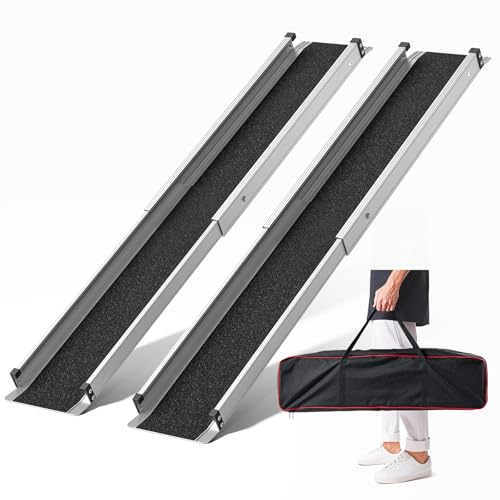
- Extends from 48 to 84 inches
- 600-pound capacity
- Includes storage bag and needs no tools
Best For: Manual wheelchair users traveling between home and vehicle access points
Best Long-Reach Option
8FT Wheelchair Ramp with Support Legs
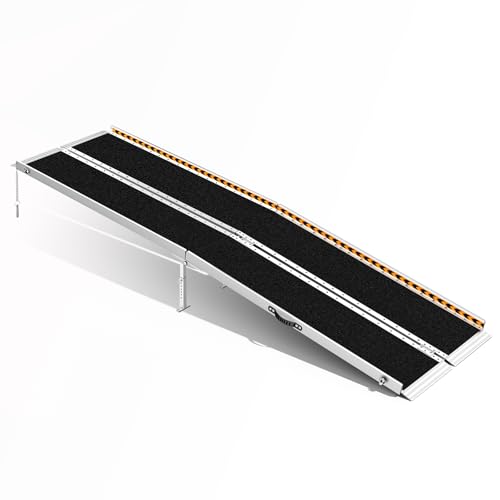
- 800-pound capacity with adjustable support legs
- Fits step heights from 8 to 24 inches
- Folds and installs without tools
Best For: Higher home steps and semi-permanent access
Best Compact Choice
VNN 4FT Portable Wheelchair Ramp

- Designed for 4- to 12-inch steps
- 800-pound aluminum ramp that folds for storage
- Non-skid surface with side baffles and reflectors
Best For: Low steps, doorways, and occasional transport
Best Mid-Length Balance
FACHNUO 6FT Portable Wheelchair Ramp

- Recommended for 6- to 18-inch steps
- 800-pound folding aluminum design
- Carrying handle and layered traction features
Best For: Mid-height home steps and flexible everyday access
Best Overall
VNN 7-Foot Portable Wheelchair Ramp

- 800-pound aluminum capacity
- Foldable with carrying handle
- Double non-skid surface and side safety features
Best For: Versatile home, garage, and vehicle access
Best Long Ramp
FACHNUO 10-Foot Ramp with Support Legs

- Recommended for 10- to 30-inch heights
- 800-pound capacity
- Reflective strips and non-slip aluminum surface
Best For: Higher steps and semi-permanent access setups
Best for Low Thresholds

- Designed for 2- to 6-inch adjustments
- Lightweight 11-pound folding design
- 800-pound capacity with textured aluminum
Best For: Low steps, thresholds, and temporary access
Best Seamless Folding Ramp – 6-Foot Portable Aluminum Ramp
For wheelchair ramps that balance portability with a high weight rating, this 6-foot aluminum model is designed for steps measuring 6 to 18 inches high. Its seamless center hinge, textured surface, and safety features make it a practical option for home entries, garages, and vehicle access.
Best For: Home steps, doorways, garages, and users needing a foldable ramp rated up to 800 pounds.
Pros:
- Seamless center hinge helps reduce tripping concerns and improves comfort for pets and users.
- Double non-skid design combines a folded aluminum surface with a non-skid layer.
- Foldable aluminum construction includes a comfortable carrying handle.
- Side baffles, reflective warning stickers, and transition plates add practical safety details.
Cons:
- Designed for step heights from 6 to 18 inches, so it may not suit lower or higher rises.
- At 35.5 pounds, it is portable but heavier than shorter ramp options.
- Its 29.2-inch width and 72-inch length require adequate setup space.
This wheelchair ramp is a strong all-around choice when you need substantial capacity and a long, stable surface. Measure the rise and available landing area before buying, and do not exceed the stated 800-pound limit.
Best Heavy-Duty Handrail Ramp – 8-Foot Aluminum Wheelchair Ramp
This 8-foot model is one of the wheelchair ramps to consider when users want a gradual approach and added support from handrails. Its rugged aluminum construction, 1,200-pound capacity, foldable design, and adjustable flap suit demanding residential accessibility setups.
Best For: Users who want handrail support and a high-capacity ramp for steps, thresholds, and raised entrances.
Pros:
- Sturdy handrails on both sides provide additional support and stability.
- 1,200-pound load capacity accommodates wheelchairs, mobility scooters, walkers, and other equipment.
- Eight-foot length helps create a more gradual transition over raised surfaces.
- Textured, weather-resistant surface is intended for indoor and outdoor use.
Cons:
- At 94.4 pounds, it is substantially heavier than compact portable ramps.
- Its large dimensions require considerable storage and installation space.
- The handrails may make it less convenient for frequent vehicle transport.
Choose this ramp when stability, handrail support, and maximum capacity matter more than lightweight portability. Confirm that the ramp’s footprint and adjustable components fit your intended entrance before purchase.
Best Compact Entry Ramp – 3-Foot Folding Aluminum Ramp
For short rises, this 3-foot wheelchair ramp offers a compact solution for one or two steps measuring 3 to 9 inches high. The aluminum ramp folds in half, weighs about 17 pounds, and includes traction and visibility features for doorways, thresholds, and raised entrances.
Best For: Doorways and home steps with a 3- to 9-inch rise, especially when storage and transportability are priorities.
Pros:
- Supports up to 800 pounds with corrosion-resistant aluminum construction.
- Folds for storage and transport, with a stated folded length of 36 inches.
- Non-slip surface, anti-slip backing, side baffles, and reflective strips support safer use.
- Compatible with manual and electric wheelchairs, scooters, walkers, trolleys, and strollers.
Cons:
- Limited to rises from 3 to 9 inches, so it is not intended for taller steps.
- The 3-foot length may provide less gradual access than longer ramps.
- It does not include handrails for users who want that type of support.
This is a practical pick for low thresholds and short steps where a longer ramp would be unnecessary. Measure the vertical rise first, and select a longer model for elevations above 9 inches.
Best Telescoping Travel Ramp – Adjustable 7-Foot Aluminum Ramp
This telescoping wheelchair ramp is designed for flexible setup at home, in vehicles, or while traveling. The two-piece aluminum design extends from 48 to 84 inches, weighs about 20 pounds as a pair, and includes a storage bag for transport.
Best For: Manual wheelchair users who need an adjustable, travel-friendly ramp for steps and vehicle loading.
Pros:
- Adjustable length from 48 to 84 inches helps accommodate different access situations.
- Telescoping design requires no tools and stores in the included bag.
- Triple anti-skid design and a waterproof, rustproof surface support stable use.
- Lightweight two-piece construction is suited to home and travel use.
Cons:
- 600-pound capacity is lower than the 800- and 1,200-pound options in this roundup.
- The product is not compatible with power wheelchairs or scooters.
- Users must verify the extended length and fit for their intended rise before purchase.
This ramp stands out for adjustability and portability, particularly for manual wheelchair users who need a compact setup in multiple locations. Confirm both the required length and equipment compatibility before relying on it for access.
Best Long-Reach Option – 8FT Wheelchair Ramp with Support Legs
For higher steps and longer approaches, this 8-foot wheelchair ramp provides a broad aluminum surface and adjustable mid-point support. It folds for storage, but its 55-pound weight makes it more practical for semi-permanent home use or setup by two people.
Best For: Home entrances, garages, and users who need a ramp for 8- to 24-inch step heights.
Pros:
- Supports up to 800 pounds.
- Adjustable support legs help reduce sagging or wobbling.
- Double non-skid surface, side baffles, and reflective stickers improve visibility and traction.
- Folds to 48 x 14 x 6.3 inches and sets up without tools.
Cons:
- At 55 pounds, it is a two-person lift.
- Its 8-foot length requires more storage and setup space.
This is the strongest fit of the three for taller steps and repeated home access. Confirm the available landing space and plan for assistance when moving it.
Best Compact Choice – VNN 4FT Portable Wheelchair Ramp
This 4-foot wheelchair ramp is a relatively manageable option for low steps, doorways, and garage entries. Its aluminum construction folds for transport, while the textured, non-skid surface and side safety features add stability during use.
Best For: Low home or garage steps measuring 4 to 12 inches high, along with occasional transport and doorway access.
Pros:
- Supports up to 800 pounds.
- Folds for easier carrying and storage.
- Double non-skid protection, side baffles, and reflective warning stickers support safer use.
- Transition plates help the ramp meet the ground at the top and bottom.
Cons:
- Limited to recommended step heights of 4 to 12 inches.
- At 23.8 pounds, it may still be cumbersome for some users to carry.
- The manufacturer notes that the ramp may sink during use before rebounding.
Choose this model when your step height falls within its specified range and portability matters more than reach. Measure the step before ordering to avoid using too short a ramp.
Best Mid-Length Balance – FACHNUO 6FT Portable Wheelchair Ramp
This 6-foot wheelchair ramp balances reach and portability for home steps between 6 and 18 inches. It has a folding suitcase-style handle, an 800-pound capacity, and a textured aluminum surface designed to provide traction for wheelchairs, scooters, walkers, and carts.
Best For: Home doorways and steps in the 6- to 18-inch range when you want more reach than a 4-foot ramp without moving to the longest model.
Pros:
- Supports up to 800 pounds.
- Folds to 36 x 15.6 x 6.3 inches and includes a carrying handle.
- Non-slip coating and pleated aluminum increase surface friction.
- Side baffles, reflective strips, and extended guide rails add safety features.
Cons:
- Its 35.2-pound weight may require careful handling.
- It is not recommended for steps outside the 6- to 18-inch range.
- The manufacturer notes that a long ramp may sink temporarily during use.
This is a practical middle-ground choice for users who need a longer ramp than a compact 4-foot model but want easier handling than an 8-foot ramp. Follow the recommended length-to-step-height guidance before purchasing.
Best Overall – VNN 7-Foot Portable Wheelchair Ramp
For shoppers comparing wheelchair ramps for home steps, the VNN 7-foot model offers a long, foldable aluminum design with an 800-pound capacity. Its 84-inch length is intended for home entrances, garage steps, vehicles, and other access points, but check the height and available space before purchasing.
Best For: Homeowners needing a versatile 7-foot ramp for wheelchairs, scooters, walkers, carts, or pet access.
Pros:
- 800-pound load capacity with sturdy aluminum construction.
- Textured aluminum and a non-skid coating provide two layers of traction.
- Folds for transport and storage and includes a comfortable carrying handle.
- Side baffles, reflective warning stickers, and transition plates support safer use.
Cons:
- At 41.3 pounds, it may be cumbersome for one person to carry.
- The long ramp can sink slightly during use before rebounding.
- Buyers need to confirm the ramp size suits their step height and setup.
This is a well-rounded wheelchair ramp for users who want portable coverage across several locations. Its length and safety features are useful, but proper sizing and weight limits remain essential.
Best Long Ramp – FACHNUO 10-Foot Ramp with Support Legs
The FACHNUO 10-foot model is one of the longer wheelchair ramps for home steps, measuring 120 inches when unfolded. It is recommended for step heights from 10 to 30 inches and has an 800-pound capacity, though its large size and roughly 63- to 71-pound listed weight make multiple-person handling advisable.
Best For: Higher steps and access points where a longer ramp is needed and several people can help position it.
Pros:
- 10-foot length supports recommended heights from 10 to 30 inches.
- 800-pound aluminum construction accommodates manual and electric wheelchairs, scooters, and walkers.
- Non-slip coating and pleated surface increase traction.
- Reflective strips, side baffles, guide rails, and corrosion-resistant hinges add practical safety and durability features.
Cons:
- Its large folded size and listed weight make it difficult for one person to carry.
- The ramp may sink slightly during use before rebounding.
- It may be longer and heavier than necessary for low steps or frequent solo transport.
This ramp is best suited to more substantial height changes rather than small thresholds. Measure carefully, follow the recommended height range, and plan for assistance when transporting or positioning it.
Best for Low Thresholds – FACHNUO 2-Foot Portable Ramp
For low door thresholds and small steps, this compact FACHNUO model is among the more manageable wheelchair ramps for home use. The 24-inch ramp is intended for 2- to 6-inch height adjustments, with the manufacturer recommending no more than 4 inches for wheelchair access, so careful measurement is important.
Best For: Low steps, doorways, and temporary access points where a short, lightweight folding ramp is appropriate.
Pros:
- Compact 24-inch design weighs about 11 pounds and includes a carrying handle.
- 800-pound maximum load capacity.
- Textured aluminum surface, side baffles, reflective strips, and extended guide rails support traction and visibility.
- Suitable for scooters, electric wheelchairs, and walkers when dimensions are compatible.
Cons:
- Not intended for tall steps; wheelchair use is recommended only up to a 4-inch step height.
- The wheelbase must not exceed 27 inches.
- Threshold and sliding-door installations require sufficient clearance for the extension plate and door operation.
This is a practical choice when the height difference is small and portability matters. Verify step height, wheelbase, door clearance, and extension-plate placement before relying on it for daily access.
How We Picked These Wheelchair Ramps
We focused on practical factors that affect everyday accessibility: ramp length, stated weight capacity, construction, traction, portability, storage, and whether the design includes support legs or handrails. The selection includes short threshold-style ramps for small rises, medium-length options for porch steps, and longer models intended to provide a gentler incline.
Because installation conditions vary, treat listed specifications as a starting point. Always verify the product’s dimensions, weight limit, surface width, and setup requirements against your mobility device and entrance before buying.
Quick Comparison
| Ramp type | Best suited to | Main advantage | Watch for |
|---|---|---|---|
| 2–3 feet | Low thresholds and small steps | Compact and easy to store | Steeper incline on taller rises |
| 4–6 feet | Typical home steps and portable use | Balance of reach and portability | May need careful placement |
| 7–8 feet | Higher steps and gentler approaches | More usable ramp length | Heavier and needs more space |
| 10 feet | Large rises requiring a lower slope | Gentlest approach among these sizes | Requires substantial clear area |
Key Buying Factors for Wheelchair Ramps
Measure the Rise First
Measure vertically from the ground or lower landing to the top of the step or threshold. A longer ramp generally creates a gentler incline, but it also requires more horizontal clearance. Confirm that the ramp can sit securely without blocking doors, walkways, or vehicle access.
Check Capacity and Usable Width
Include the combined weight of the user, wheelchair or scooter, and any bags or equipment. Choose a ramp with a suitable safety margin rather than buying exactly to the stated limit. Also check the usable riding width, especially for wider chairs and scooters.
Prioritize Traction and Stability
Non-skid surfaces can improve grip, but outdoor ramps still need careful attention in rain, snow, mud, and leaves. Look for secure contact at both ends, stable support legs where provided, and a design that does not flex or shift during use. Handrails may provide valuable assistance on longer or higher ramps.
Balance Portability with Length
Short aluminum ramps are usually easier to carry and store, while longer ramps can be safer for taller steps but may require two-person handling. Folding or telescoping designs can simplify transport, though hinges, latches, and extension points should be checked before each use.
Who Should Buy Which Wheelchair Ramps?
- For low thresholds: Choose a 2- or 3-foot ramp when the rise is modest and compact storage is important.
- For everyday home steps: A 4- to 6-foot model can offer a practical compromise between incline, reach, and portability.
- For taller steps or a gentler approach: Consider a 7- or 8-foot ramp, especially when the entrance has adequate landing space.
- For demanding rises: A 10-foot ramp may be preferable when reducing the slope is the priority, provided there is enough room for safe setup.
- For heavier equipment or frequent use: Favor a clearly rated heavy-duty model with dependable support and enough width for the chair or scooter.
Before first use, test the ramp unloaded and then with assistance. Recheck placement regularly, particularly outdoors or on uneven surfaces, and follow the manufacturer’s safety and capacity instructions.