Window cleaning robots can reduce the time, effort, and ladder work involved in maintaining large panes, exterior glass, and hard-to-reach windows. The best models combine dependable suction with accurate navigation, consistent cleaning coverage, and safety systems suited to your home.
This roundup compares 10 window cleaning robots across suction strength, spray technology, edge performance, portability, and practical operating features so you can choose the right match for your glass surfaces.
Best 10 Window Cleaning Robots Picks for 2026
Best Overall

- 10,000Pa suction with 10-stage safety protection
- Triple-spray wet wiping for everyday messes
- Smart routes and edge-focused cleaning
Best For: Large and hard-to-reach windows
Best Dual-Stage Cleaner

- Round pad wet-lifts, square pad dry-polishes
- 6,500Pa suction with 55N constant pressure
- NAVI 7.0 mapping and 30-minute power protection
Best For: Streak-reduced edge and corner cleaning
Best Remote-Control Value

- Four-nozzle spray system for even coverage
- Six cleaning modes with remote control
- 25-minute power-failure adhesion protection
Best For: High windows, mirrors, and glass doors
Best Lightweight Dual-Stage Option

- 1.3kg design for easier handling
- Round-square wet and dry cleaning system
- 30-minute power protection with safety rope
Best For: Windows and smaller smooth glass surfaces
Best for High Windows

- 6400Pa variable suction
- 30-minute power-cut attachment backup
- Works on windows, skylights, mirrors, and tile
Best For: High or difficult-to-reach glass surfaces
Compact Safety Pick
Tosima W5 Window Cleaning Robot
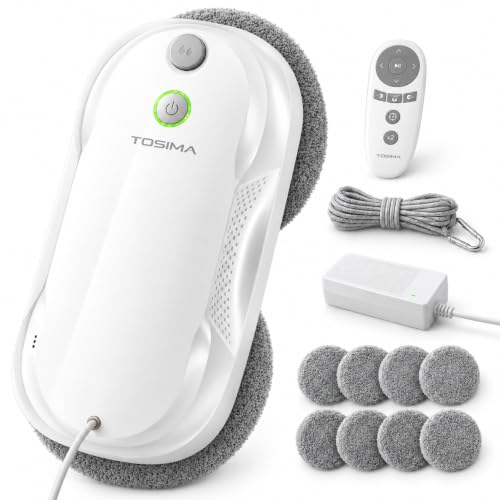
- Compact and lightweight for smaller homes
- Adaptive suction up to 6400Pa
- Safety rope and 25-minute backup battery
Best For: Apartments, condos, and safety-conscious users
Value Glass-Cleaning Option
Automatic Dual-Spray Window Robot

- Dual spray with edge detection
- 3000Pa suction and 20-minute UPS backup
- Includes 10 microfiber cloths
Best For: Pre-cleaned windows, glass doors, mirrors, and suitable skylights
Best Overall – ECOVACS WINBOT W2S PRO
For shoppers comparing window cleaning robots, the ECOVACS WINBOT W2S PRO stands out with 10,000Pa suction, triple-spray wet wiping, and route planning designed for everyday glass cleaning. Its edge-focused design and multiple cleaning modes make it a versatile option for large or hard-to-reach windows.
Best For: Hands-free cleaning of floor-to-ceiling, large, and difficult-to-reach glass.
Pros:
- 10,000Pa suction and a 10-stage safety system support secure operation.
- Triple-spray wet wiping helps loosen dust, pollen, fingerprints, and water spots.
- TruEdge 2.0 brushes and felt bristles help clean near frames and corners.
- WIN-SLAM 4.0 offers several modes, including Fast, Thorough, Edge, and Zone cleaning.
Cons:
- It uses corded electric power, so setup requires access to a power source.
- The water tank capacity is limited to 4.1 fluid ounces.
The W2S PRO is a strong all-around choice when edge coverage, wet wiping, and high suction matter more than cordless convenience. Use the safety tether and follow the manual during every elevated cleaning job.
Best Dual-Stage Cleaner – HUTT 10 Premium Round-Square
Among window cleaning robots, this HUTT model uses separate round and square pads for wet lifting followed by dry wiping and polishing. Its 6,500Pa suction, constant-pressure base, and ultrasonic spray system are aimed at thorough cleaning with reduced streaking.
Best For: Buyers who want wet lifting, dry polishing, and close edge coverage in one device.
Pros:
- Round-square dual-stage cleaning combines wet cleaning with dry polishing.
- 6,500Pa suction and 55N constant pressure support stable, forceful cleaning.
- NAVI 7.0 mapping and 14 sensors help plan routes and detect edges.
- A UPS battery can maintain adhesion for up to 30 minutes during power interruption.
Cons:
- The spray system works best with purified water, and cleaning liquid is not included.
- Tracks and pads must be kept appropriately clean, dry, and wrung out to maintain traction.
- At up to 65dB, it is not designed for silent operation.
This HUTT is particularly compelling for streak-conscious users who are willing to manage pad moisture and water quality. It also supports mirrors, shower doors, and sliding doors, provided the surface is suitable.
Best Remote-Control Value – TOSIMA WA9C Pro
The TOSIMA WA9C Pro is a practical pick among window cleaning robots for shoppers who prefer remote control and adjustable spray settings. Its four-nozzle system, automatic navigation, and multiple cleaning paths are suited to windows, mirrors, and glass doors.
Best For: Remote-controlled cleaning of high windows and other glass surfaces.
Pros:
- Four precision nozzles provide even spray coverage across the glass.
- Three path options, including N-shape, Z-shape, and manual control, support targeted cleaning.
- Air-pressure monitoring, a drop sensor, and power-failure protection improve operating confidence.
- The kit includes four mops, replacement nozzles, an unclogging needle, and a water bottle.
Cons:
- Its listed suction range of 2,600–3,200Pa is lower than the higher-suction models in this roundup.
- The built-in battery maintains adhesion for up to 25 minutes during a power outage.
- Operation requires anchoring the safety rope for overhead work.
The WA9C Pro makes sense if straightforward remote operation and included maintenance accessories are priorities. Its lower suction rating may make it less appealing to shoppers focused primarily on maximum adhesion.
Best Lightweight Dual-Stage Option – HUTT 6500Pa Round-Square
This HUTT window cleaning robot pairs 6,500Pa suction with a round-square dual-pad system that wet-cleans and dry-polishes glass. Its 1.3kg design, smart mapping, and support for smaller glass surfaces make it flexible for windows and other smooth surfaces.
Best For: Lightweight handling across windows, mirrors, shower doors, and sliding doors.
Pros:
- The dual-stage pad setup helps lift dirt, reduce streaks, and polish glass.
- A 55N suspension base maintains pressure while cleaning.
- Fourteen sensors support edge detection, pressure monitoring, and navigation.
- It can work on small glass surfaces starting at 30×30cm.
Cons:
- Purified water is recommended for spray performance, and cleaning solution is not included.
- Overly wet pads or dirty tracks can reduce traction and cause drifting.
- The unit operates at noise levels up to 65dB.
This model is a good fit for users who value a lighter device and multi-surface flexibility without giving up dual-stage cleaning. Proper pad preparation and track maintenance are important for consistent results.
Best for Easy Setup – ECOVACS WINBOT W2 PRO Omni
For shoppers comparing window cleaning robots, the ECOVACS WINBOT W2 PRO Omni stands out for flexible power options and broad cleaning capability. It can run on battery for up to 110 minutes or operate continuously while plugged in, while its three-nozzle spray system and WIN-SLAM 4.0 navigation support efficient cleaning across several window styles.
Best For: Large glass areas, rooms without convenient outlets, and users who want a feature-rich robot with a portable station.
Pros:
- Offers battery and plugged-in power modes, with up to 110 minutes of battery cleaning.
- Multi-functional station serves as a controller, charger, stabilizer, and storage solution.
- Three-nozzle wide-angle spraying, edge detection, and WIN-SLAM 4.0 path planning support thorough cleaning.
- Includes a 12-stage protection system with anti-fall features.
Cons:
- The larger station and robot may be more equipment than needed for occasional light cleaning.
- Its feature set may involve a higher upfront cost than simpler window-cleaning robots.
The W2 PRO Omni is a strong all-around choice when convenience, safety features, and flexible operation matter more than having the smallest possible device. Its plugged-in mode is particularly useful for extensive glass surfaces.
Best for High Windows – X6 High-Window Cleaning Robot
The X6 is designed for shoppers seeking window cleaning robots for high or hard-to-reach glass. Its 6400Pa variable suction, dual-spray nozzles, edge detection, and backup power protection are intended to keep it secure while cleaning windows, skylights, mirrors, and tile walls.
Best For: High-rise windows, floor-to-ceiling glass, skylights, mirrors, and other surfaces where ladder use is inconvenient.
Pros:
- 6400Pa variable suction helps the robot remain attached to vertical glass.
- UPS backup protection keeps it attached for up to 30 minutes during a power interruption.
- Includes a heavy-duty safety cable, anti-fall sensors, and automatic edge detection.
- Round, slim design covers narrow frames and reduces blind spots associated with square robots.
Cons:
- It is corded electric, so placement depends on access to a power source.
- The manufacturer recommends appropriate water amounts and clean pads to help avoid smears.
- Heavily soiled glass may require two cleaning passes.
The X6 makes the most sense when reach and attachment security are top priorities. Its remote control and one-touch start simplify operation, though users should follow the supplied safety guidance and keep the safety cable secured.
Best Compact Pick – ECOVACS WINBOT MINI 2
Among window cleaning robots, the ECOVACS WINBOT MINI 2 is a practical option for narrow glass areas and routine maintenance. Its compact body, edge-focused brushes, ultrasonic mist, and five app-controlled cleaning modes are designed for windows, mirrors, and glass doors with limited working space.
Best For: Narrow or hard-to-reach windows, framed and frameless glass, mirrors, and everyday dust or fingerprint removal.
Pros:
- Compact 8.46-by-8.46-inch design fits tighter glass areas than larger robots.
- Four corner brushes and thin side wings bring the pad within 1 mm of edges.
- Ultrasonic atomization applies fine mist while the microfiber pad provides 14 N of cleaning pressure.
- Offers five cleaning modes, app control, 8000Pa suction, and 10-tier protection.
Cons:
- It requires a minimum applicable window size of 8.66 by 9.84 inches.
- It is optimized for light dirt and dust; heavily soiled glass may need multiple cycles.
- The compact unit still operates at a listed noise level of 65 dB.
The WINBOT MINI 2 is a good fit when maneuverability and edge coverage are more important than cleaning very large surfaces quickly. Its dedicated Edge Clean mode can also reduce manual corner touch-ups.
Compact Safety Pick – Tosima W5 Window Cleaning Robot
The Tosima W5 is a practical choice for shoppers comparing window cleaning robots for apartments, condos, and smaller homes. Its compact design, adaptive suction, automatic spraying, and intelligent navigation make routine glass cleaning easier without bulky equipment or ladders.
Best For: Small homes and users who prioritize compact storage, adaptive suction, and layered safety features.
Pros:
- Compact, lightweight design is easy to handle and store.
- Adaptive suction reaches up to 6400Pa and adjusts to the surface.
- Triple safety system includes a safety rope and up to 25 minutes of emergency battery power.
- Remote control and automatic navigation offer flexible operation.
Cons:
- Designed primarily for smooth glass surfaces.
- Its 6-inch cleaning path may require more passes on larger windows.
The W5 stands out among window cleaning robots for combining a small footprint with strong suction and robust safety provisions. Replaceable parts may also make routine upkeep more manageable over time.
Visible-Tank Choice – Tosima X1 Window Cleaning Robot
The Tosima X1 is a versatile option for shoppers seeking window cleaning robots for both large and small windows. Its dual-nozzle ultrasonic water atomization, visible 85 ml tank, automatic S-shaped route, and remote control support convenient wet cleaning.
Best For: Households that want visible water-level monitoring and flexible cleaning on windows, including overhead sunroom glass.
Pros:
- Dual nozzles spray in the direction of travel to help limit smearing.
- Visible 85 ml water tank makes remaining water easy to check.
- Automatic top-to-bottom S-shaped cleaning works on large and small windows.
- Backup battery holds the unit to the glass for about 25 minutes during an outage.
Cons:
- At 65 dB, it may be noticeable during operation.
- Household use is specified for temperatures from 0°C to 40°C.
For buyers comparing window cleaning robots, the X1’s visible tank and directional spraying are especially useful for reducing interruptions and managing moisture. The included safety tether remains important during use.
Value Glass-Cleaning Option – Automatic Dual-Spray Window Robot
This automatic window cleaner is a straightforward option for shoppers comparing window cleaning robots for suitable glass surfaces. It combines dual spray, edge detection, intelligent path planning, 3000Pa suction, and a 20-minute UPS backup battery, while its included cloths support a two-pass cleaning routine.
Best For: Users cleaning glass windows, doors, mirrors, or skylights who are comfortable pre-cleaning heavy dirt and following surface guidelines.
Pros:
- Dual-spray system provides even water coverage.
- Edge detection and three cleaning paths support frameless glass cleaning.
- Includes 10 microfiber cloths and a 50 ml water tank.
- Triple safety protection combines 3000Pa suction, a safety rope, and UPS backup power.
Cons:
- Heavy stains and debris require manual pre-cleaning.
- Not recommended for curved glass, thick trim, raised decorative elements, or horizontal surfaces.
- The UPS battery is for emergency holding, not cordless operation.
This model can be a useful budget-minded entry among window cleaning robots when used on compatible, pre-cleaned glass. Its clear limitations make careful setup and consistent cloth changes important for safe, streak-conscious results.
How We Picked These Window Cleaning Robots
We focused on the features that matter most during real cleaning sessions: suction performance, navigation accuracy, edge detection, spray or water-delivery design, safety backups, and ease of setup. We also considered whether each model is better suited to small interior panes, large windows, high exterior glass, or mixed household use.
Because window-cleaning conditions vary, no single specification tells the whole story. A powerful motor may help with heavier glass or uneven surfaces, while a compact design may be more useful around frames and smaller panes. Product claims and included accessories should be checked against the manufacturer’s current specifications before purchase.
Quick Comparison
| Best for | Features to prioritize |
|---|---|
| Large or hard-to-reach windows | Strong suction, long safety tether, reliable route planning |
| Frameless or edge-heavy glass | Edge detection, edge-cleaning capability, stable navigation |
| Frequent maintenance | Automatic spray, refillable tank, washable cleaning pads |
| Small panes and tight spaces | Compact body, low profile, responsive controls |
| Portable, multi-room use | Lightweight construction, convenient station or cable management |
Key Buying Factors for Window Cleaning Robots
Suction and Surface Compatibility
Pa ratings can indicate motor strength, but they are not a complete measure of grip or cleaning quality. Confirm that the robot is designed for your glass type and check its minimum and maximum window dimensions. Dust, moisture, textured glass, stickers, and damaged surfaces can affect adhesion.
Safety Systems
Look for a backup safety rope, battery or emergency power support, power-loss protection, and clear alerts. These features are especially important for exterior windows and upper-floor use. Always follow the manufacturer’s instructions and secure the tether before starting.
Navigation and Edges
Intelligent path planning can improve coverage and reduce missed areas. Edge detection is essential for frameless glass, while dedicated edge-cleaning features may help with residue along frames. Robots generally perform best on broad, flat panes with predictable boundaries.
Spray, Pads, and Maintenance
Dual nozzles, ultrasonic atomization, or automatic spray systems can distribute cleaning fluid more evenly, but they also add refill and maintenance requirements. Check tank capacity, pad availability, washable components, and how easily the unit can be removed when a cycle ends.
Who Should Buy Which Window Cleaning Robots?
Choose a high-suction model with robust safety support if you clean large, exterior, or elevated windows. Pick a compact robot when portability and small-pane access matter most. Models with automatic spray systems suit users who want less manual preparation, while edge-focused designs are preferable for frameless or heavily framed glass.
For occasional indoor cleaning, prioritize simple controls, washable pads, and easy storage over maximum suction. If you have unusual glass, narrow panes, screens, deep frames, or heavily soiled surfaces, verify compatibility first and expect to handle some finishing work by hand. Window Cleaning Robots are most effective as time-saving maintenance tools, not guaranteed replacements for every traditional cleaning method.